Location
Shyamnagar, Satkhira
Illustration
Simita Roy
Designed By
Simita Roy (Lead), Shuvra Das, Anirudva Bhowmick
Category
Competition
Organised by
Trust for SEARCH
Year
2020
Degrowth through Harmonizing People and Nature in Settlements
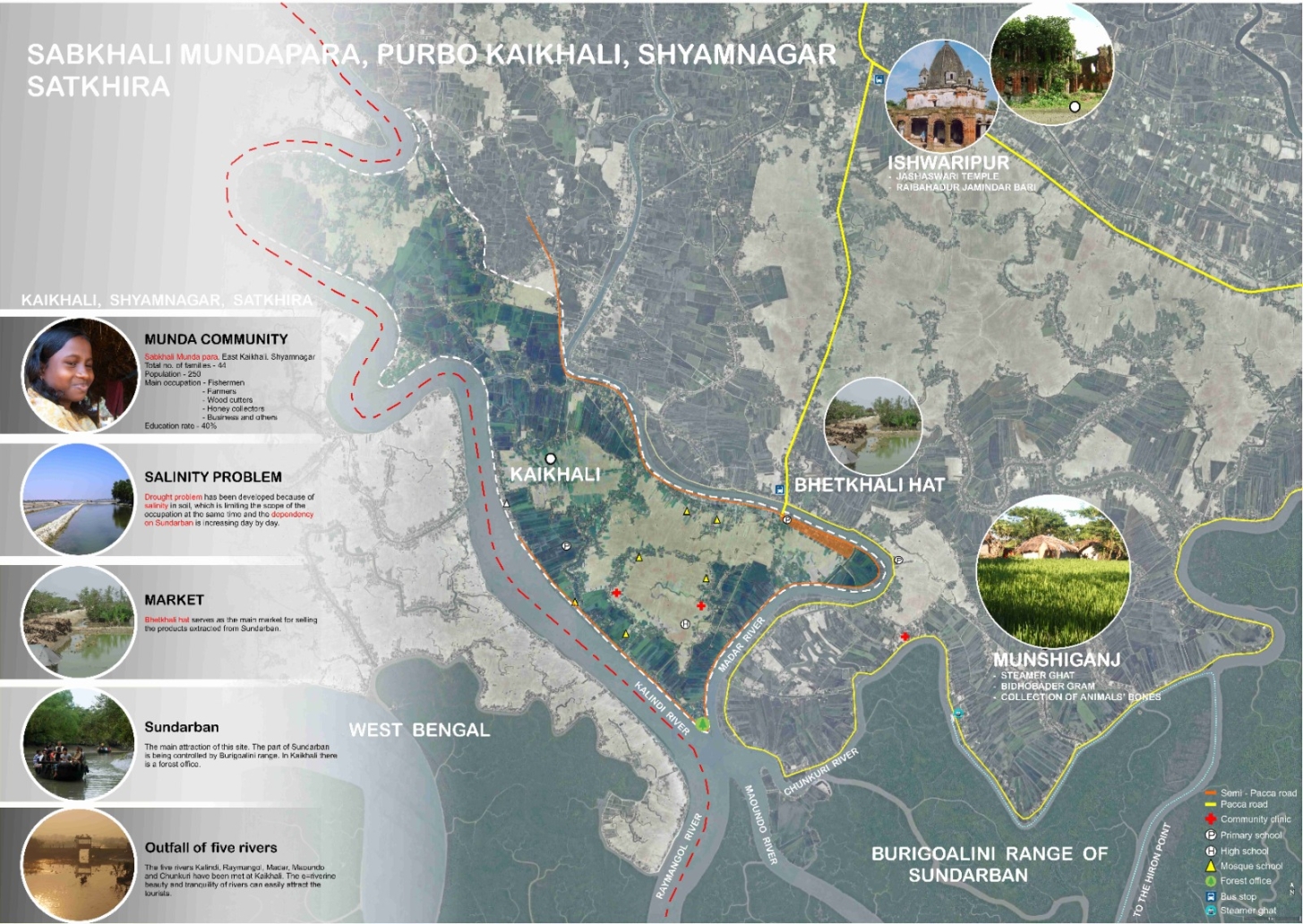
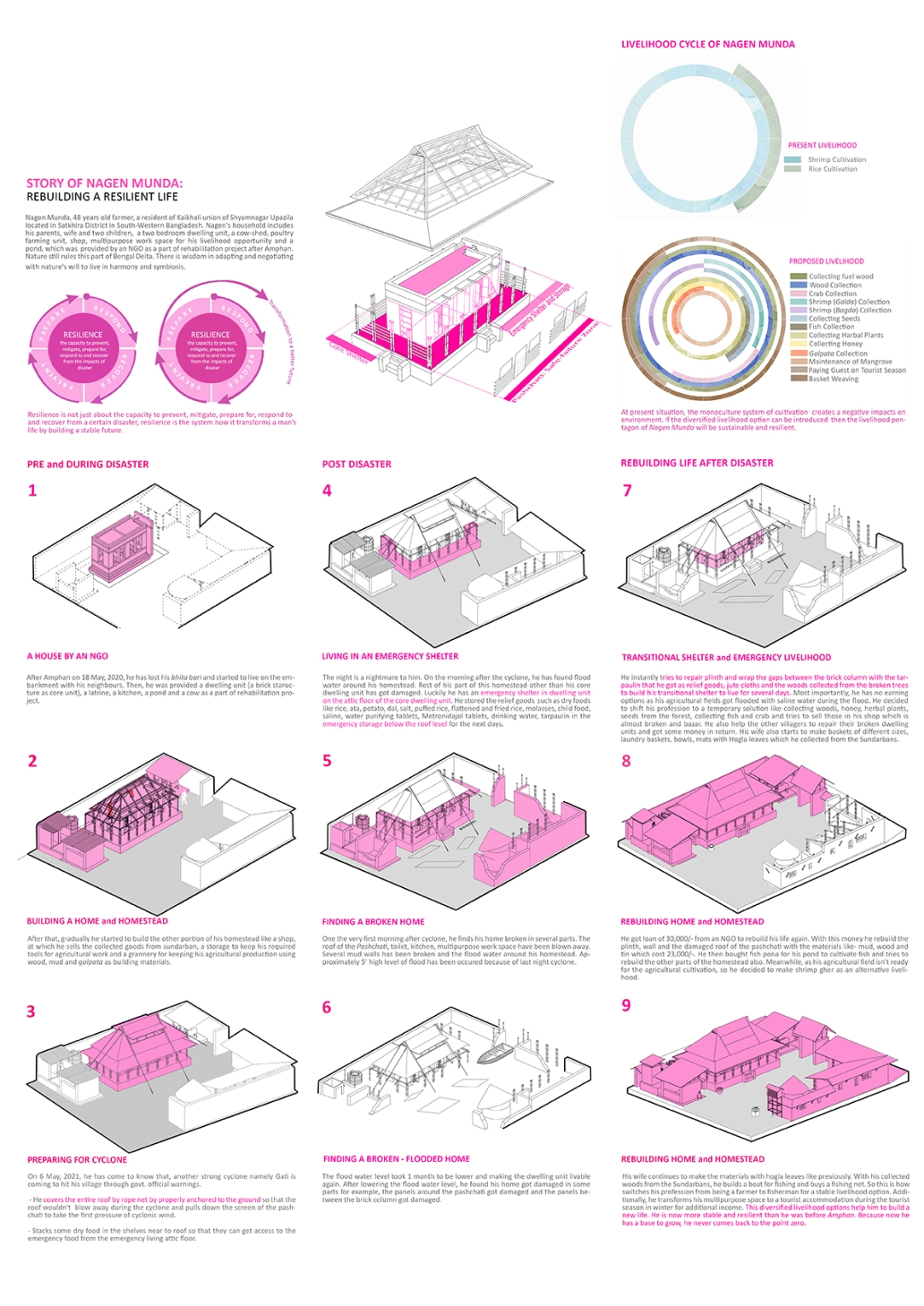
The ecological imbalance of the Sundarbans mangrove forest and the long-term impacts of climate variability present significant risks to the livelihoods of communities in Bangladesh's South-West Coastal Region. Issues such as sea-level rise, permanent inundation, salinity intrusion, and frequent storm surge inundation have become critical challenges for this area. The Munda community, an indigenous group dependent on forest resources, resides in the Kaikhali union of Shyamnagar Upazila (sub-district) in the coastal district of Satkhira. This community continuously adapts to climate change by leveraging their indigenous knowledge regarding environmental reactions and counter-reactions.
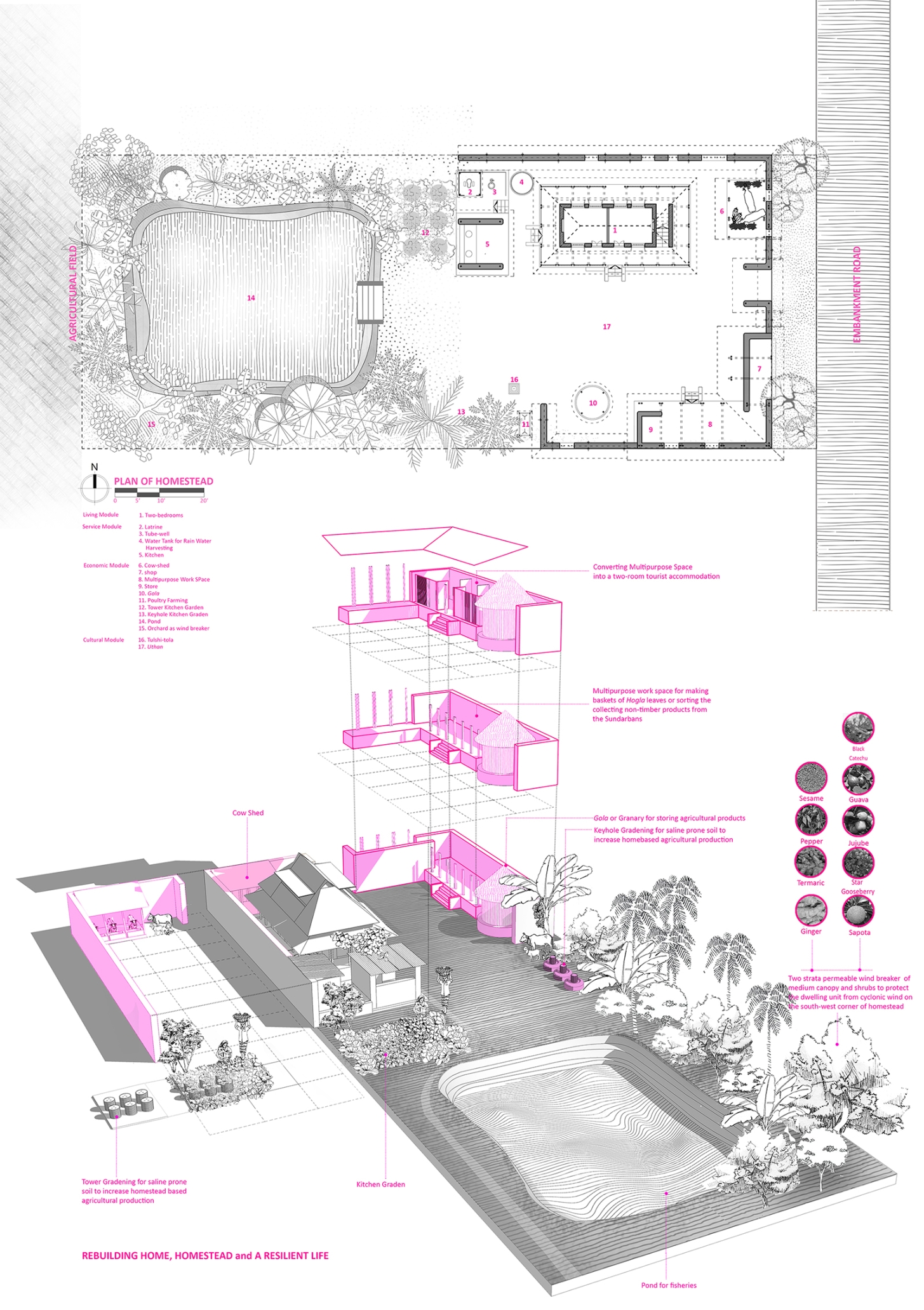
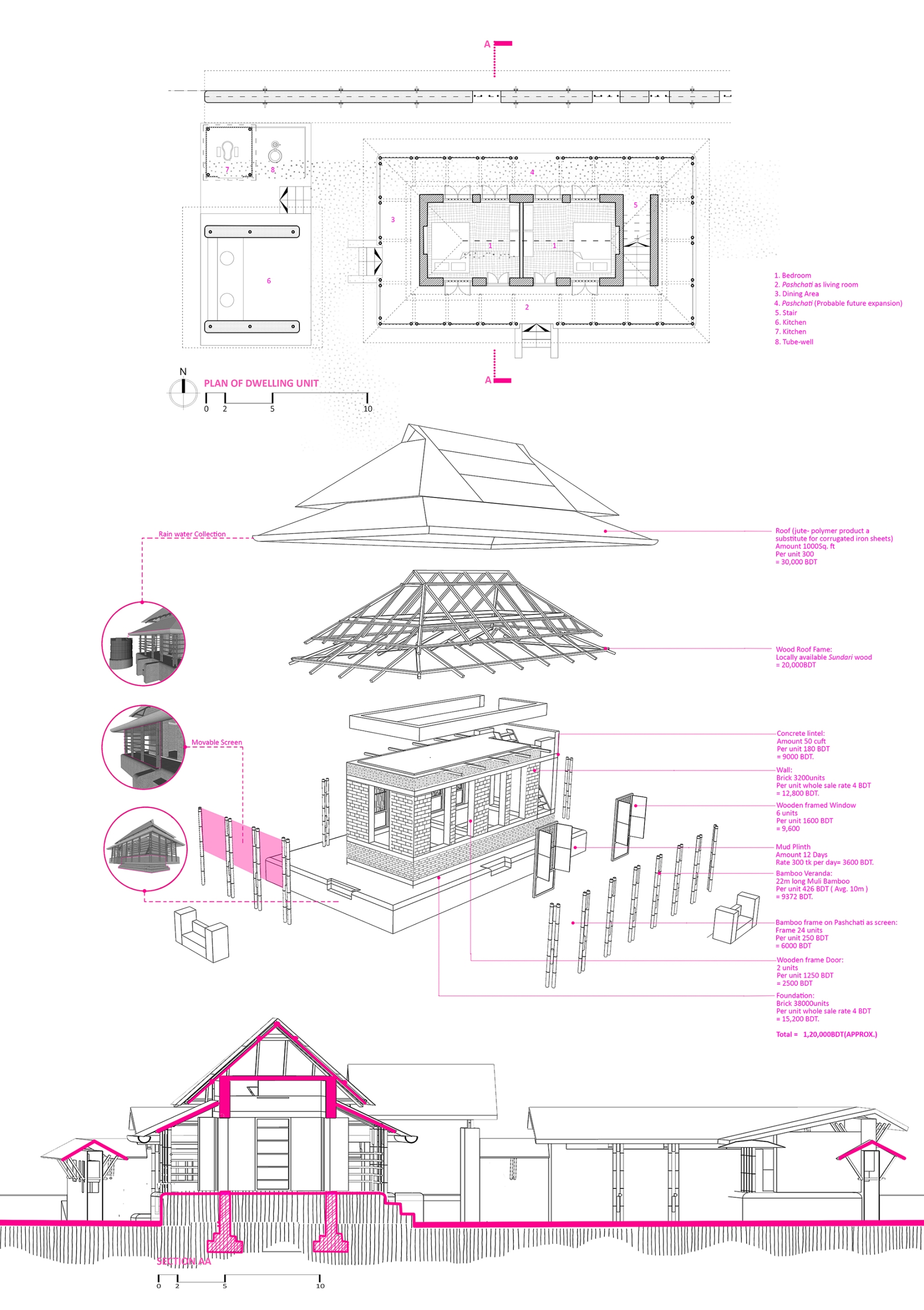
This project provides an overview of remodeling a Munda homestead within a sustainable livelihood framework, achieved through access to various livelihood resources, including natural, economic, human, and social capital. An ethnographic case study was conducted to gather context-rich data about the participants’ perceptions and responses to current climatic disasters and potential future climate changes.
The design intervention indicates that the livelihood framework and methodologies can be adapted to meet the specific contexts of the Munda community, focusing on sustainable livelihood generation at the homestead level. Such adaptive modifications in the livelihood framework necessitate the redesign of domestic spaces and their traditional components. Consequently, this study proposes several indicative design strategies derived from field and context analysis, aimed at facilitating sustainable income-generating activities for the Munda homestead and fostering transitions towards a smart village. This project emphasizes the need to balance the five capitals of human settlement—human, social, physical, natural, and financial—within a single homestead, prioritizing economic growth through the integration of both human and non-human components while limiting physical expansion.