Location
Southwest Costal Zone, Bangladesh
Illustration
Simita Roy
Designed By
Simita Roy
Category
Academic
Year
2016
Economic Growth Redefines the Flow of Deltas
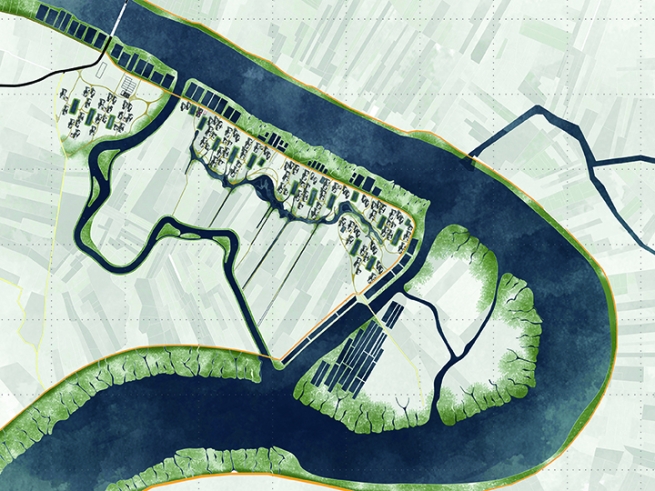
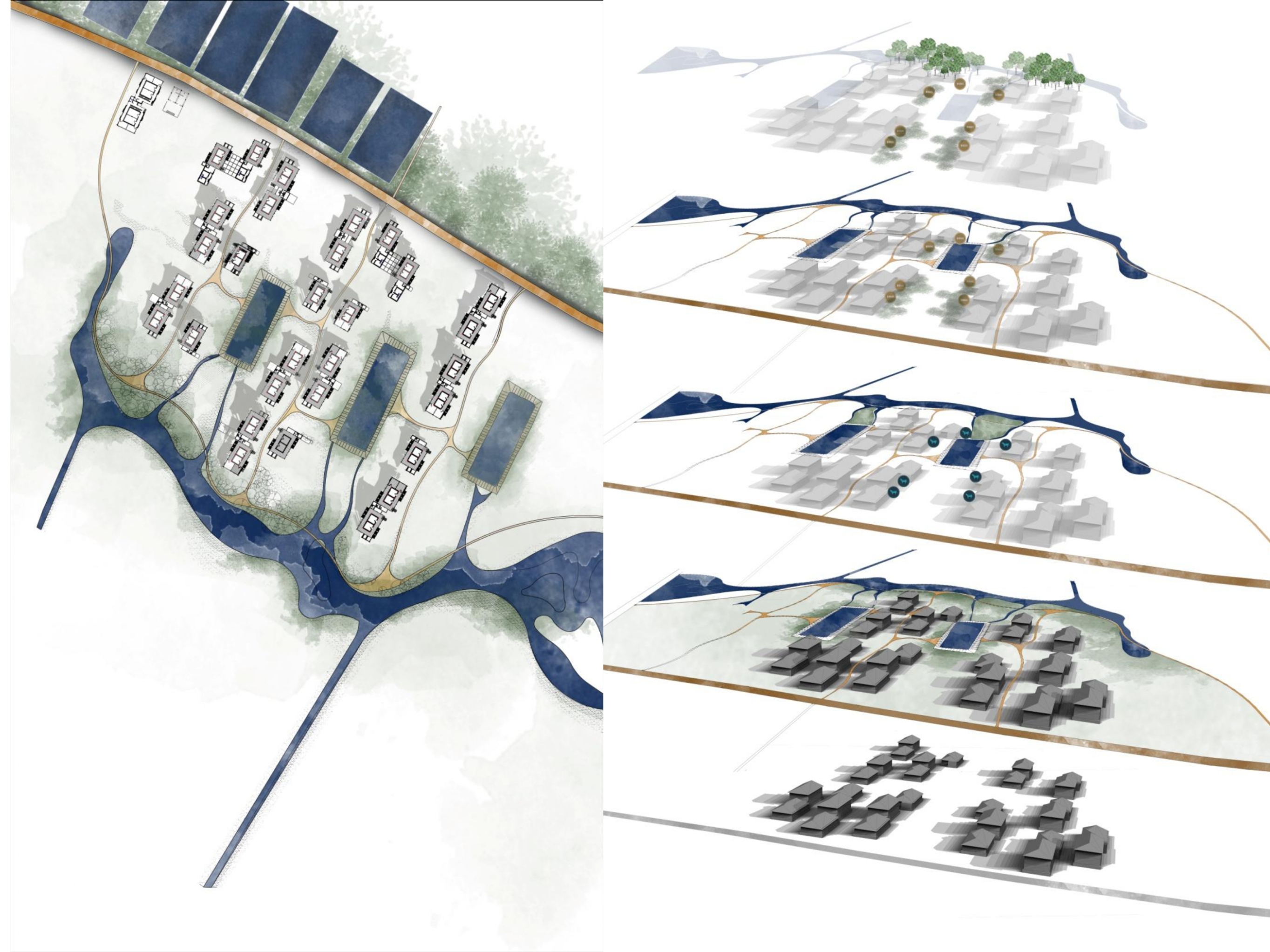
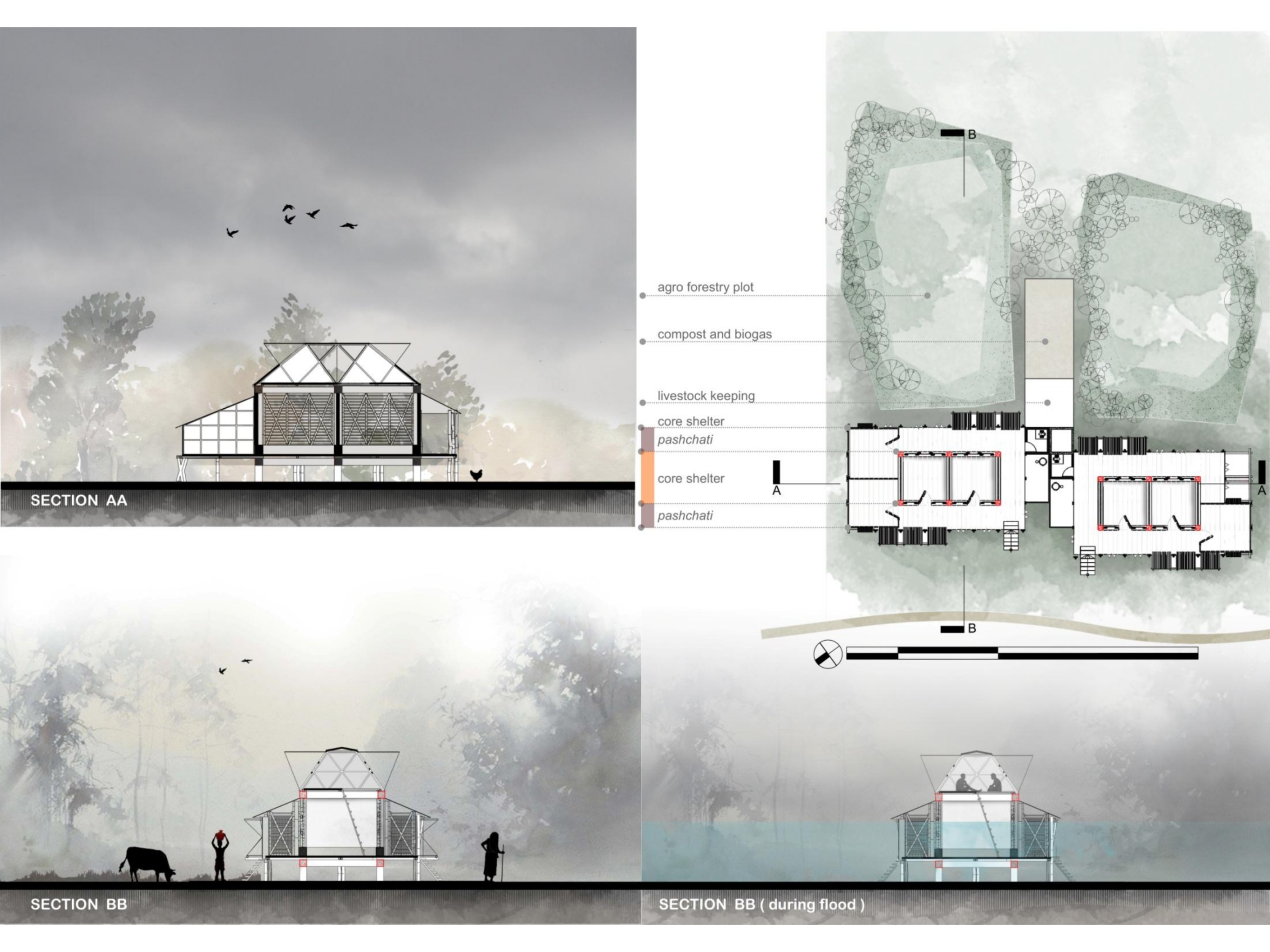
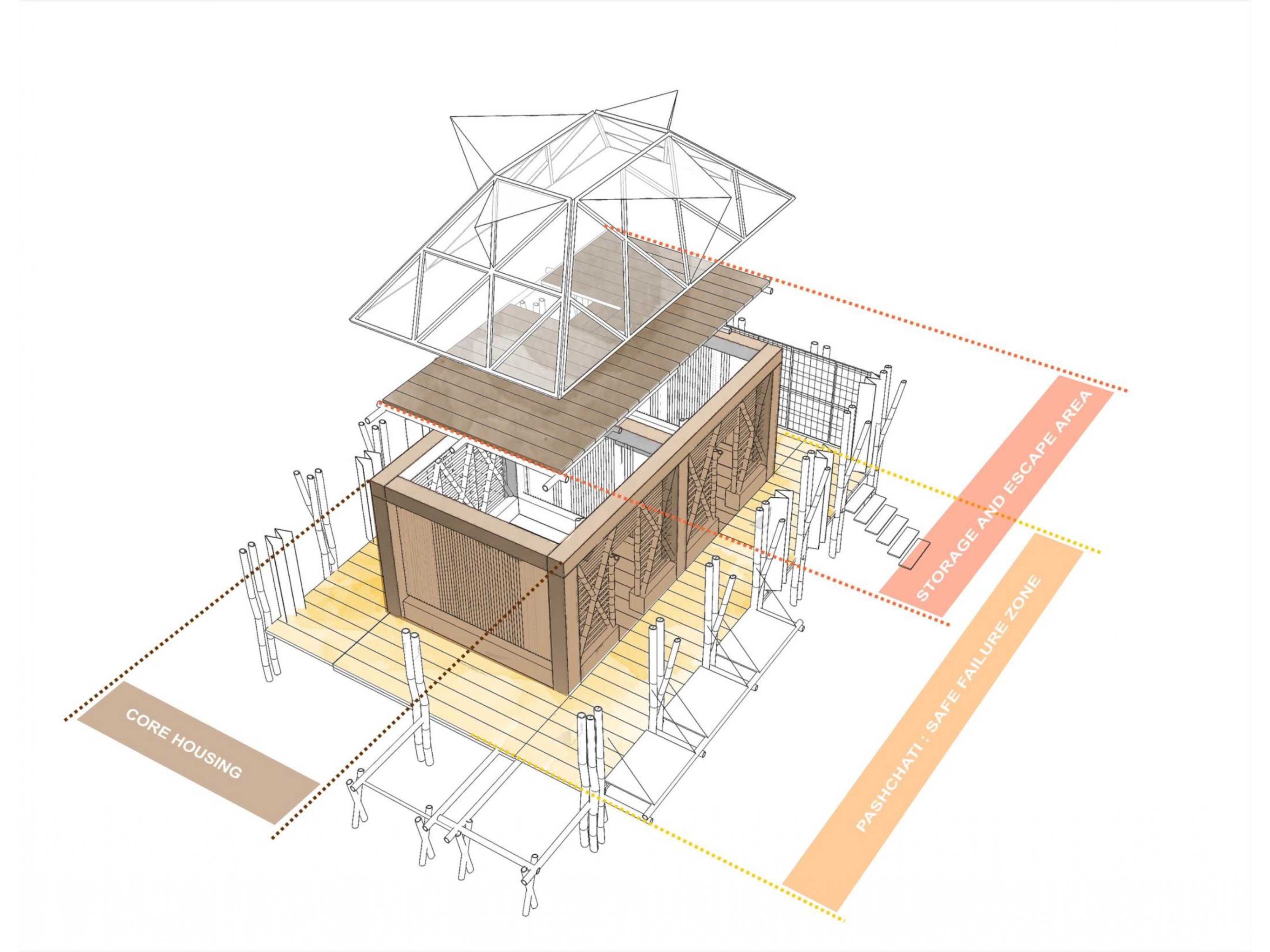
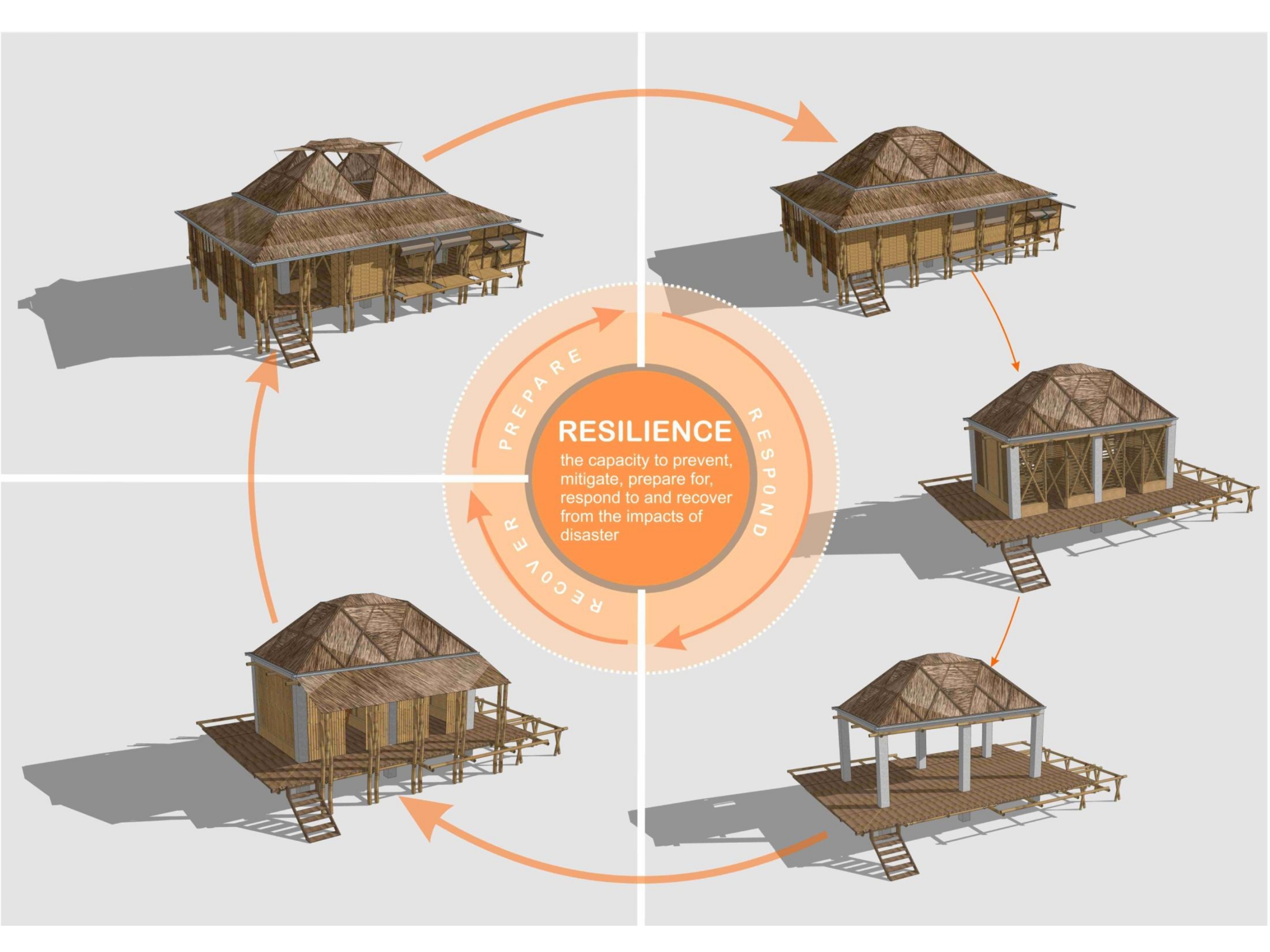
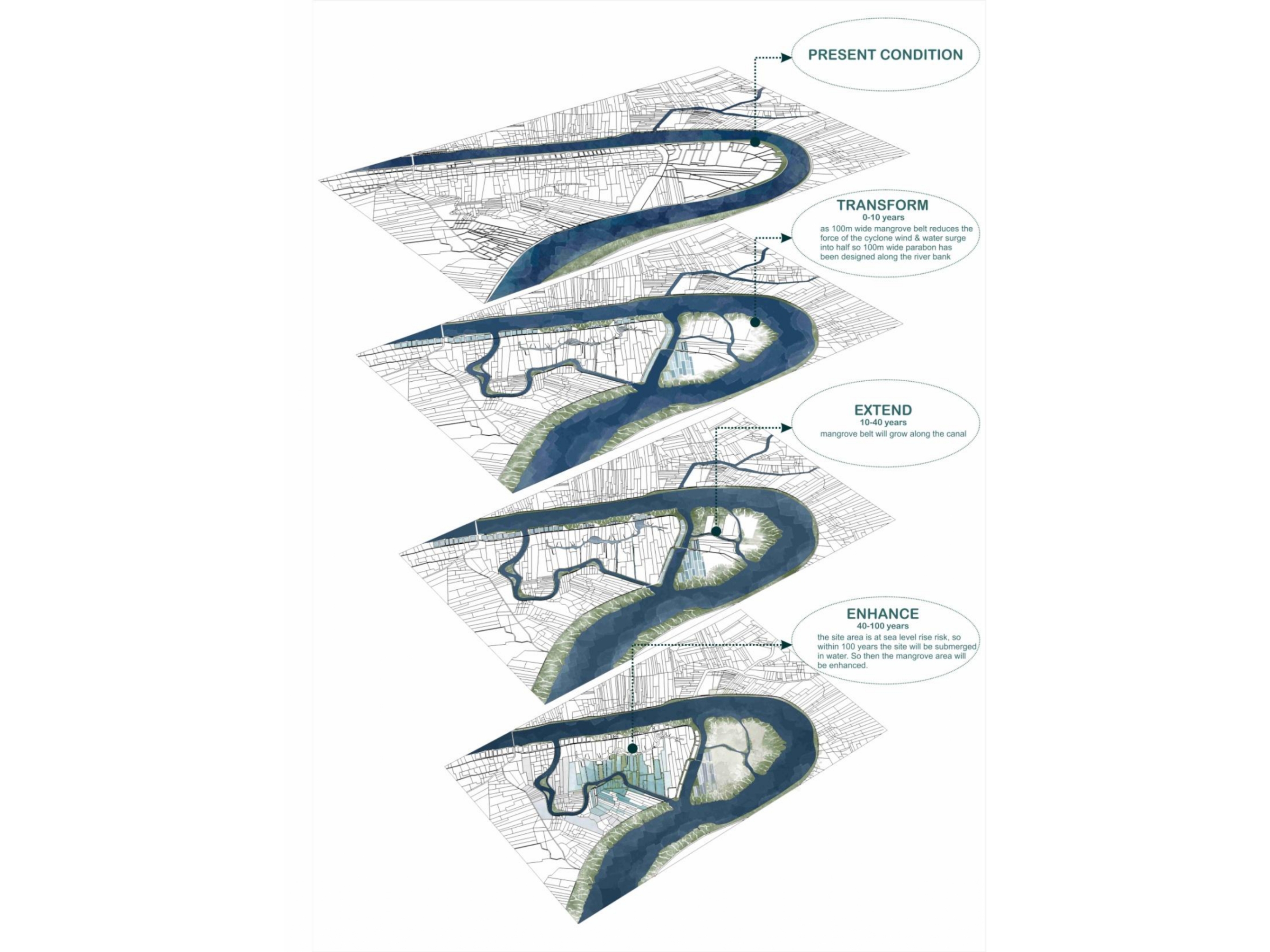
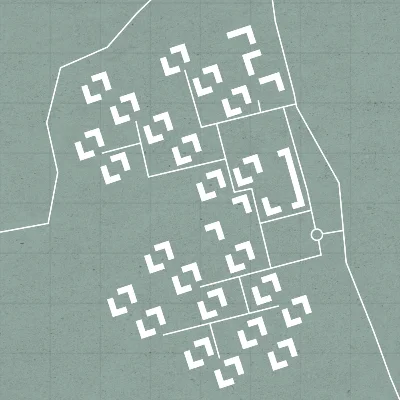
Bangladesh's southwestern coastal region, particularly Shyamnagar Upazila in Satkhira, faces severe climate change challenges, including flooding, rising sea levels, coastal erosion, subsidence, and salinity intrusion. In addition to these issues, the rate of economic growth in the area has been redefining the flow of the delta. This undergraduate thesis focused on creating an ecologically responsive, resilient community capable of adapting to these challenges while maintaining sustainable growth. Shyamnagar, one of the most vulnerable areas, was severely impacted by Cyclone Aila in 2009, which underscored the urgent need for adaptive strategies. The project integrated field observations, software simulations, and design thinking to propose transformational changes for the region, emphasizing the relationship between micro and macro scales of development.
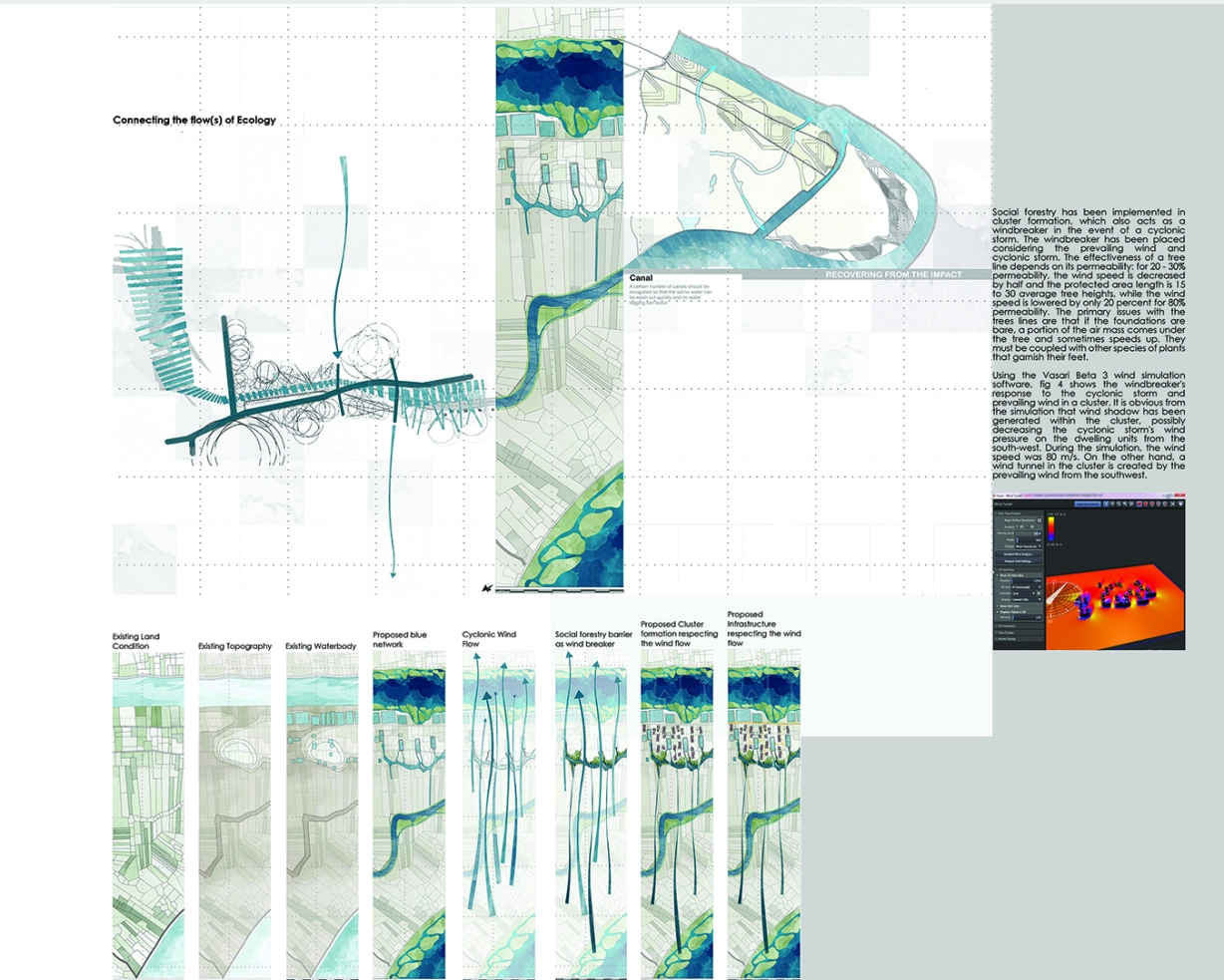
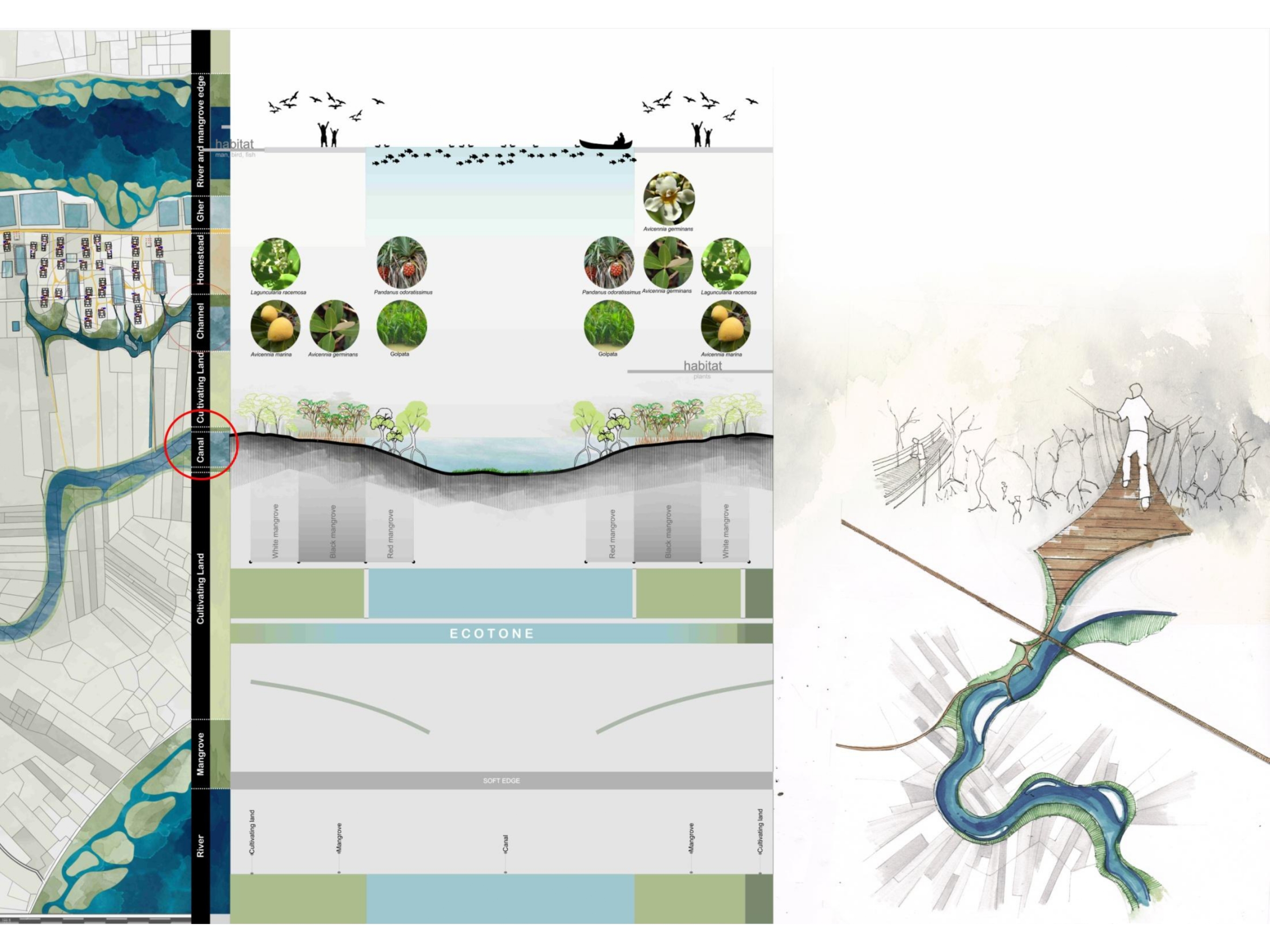
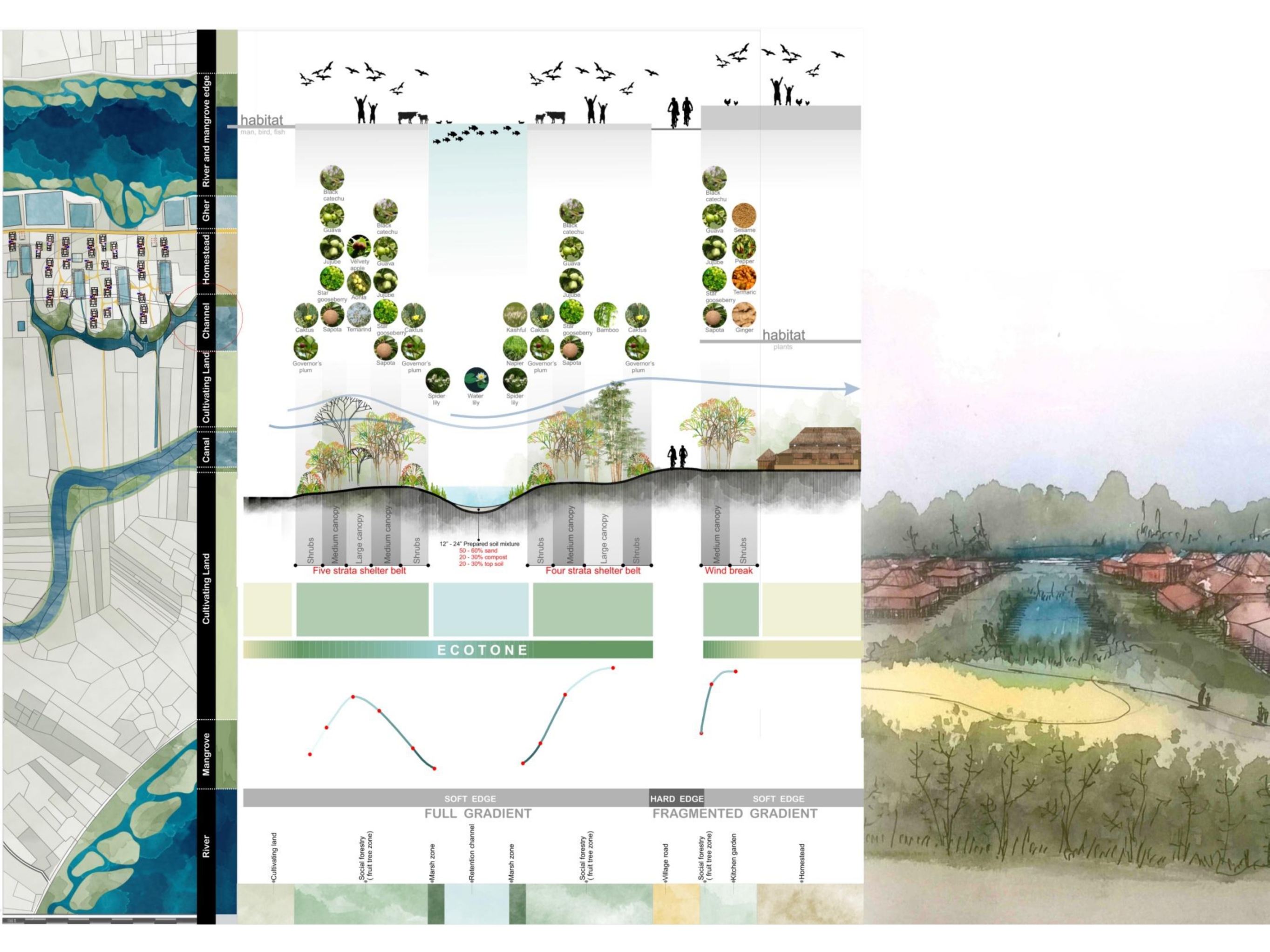
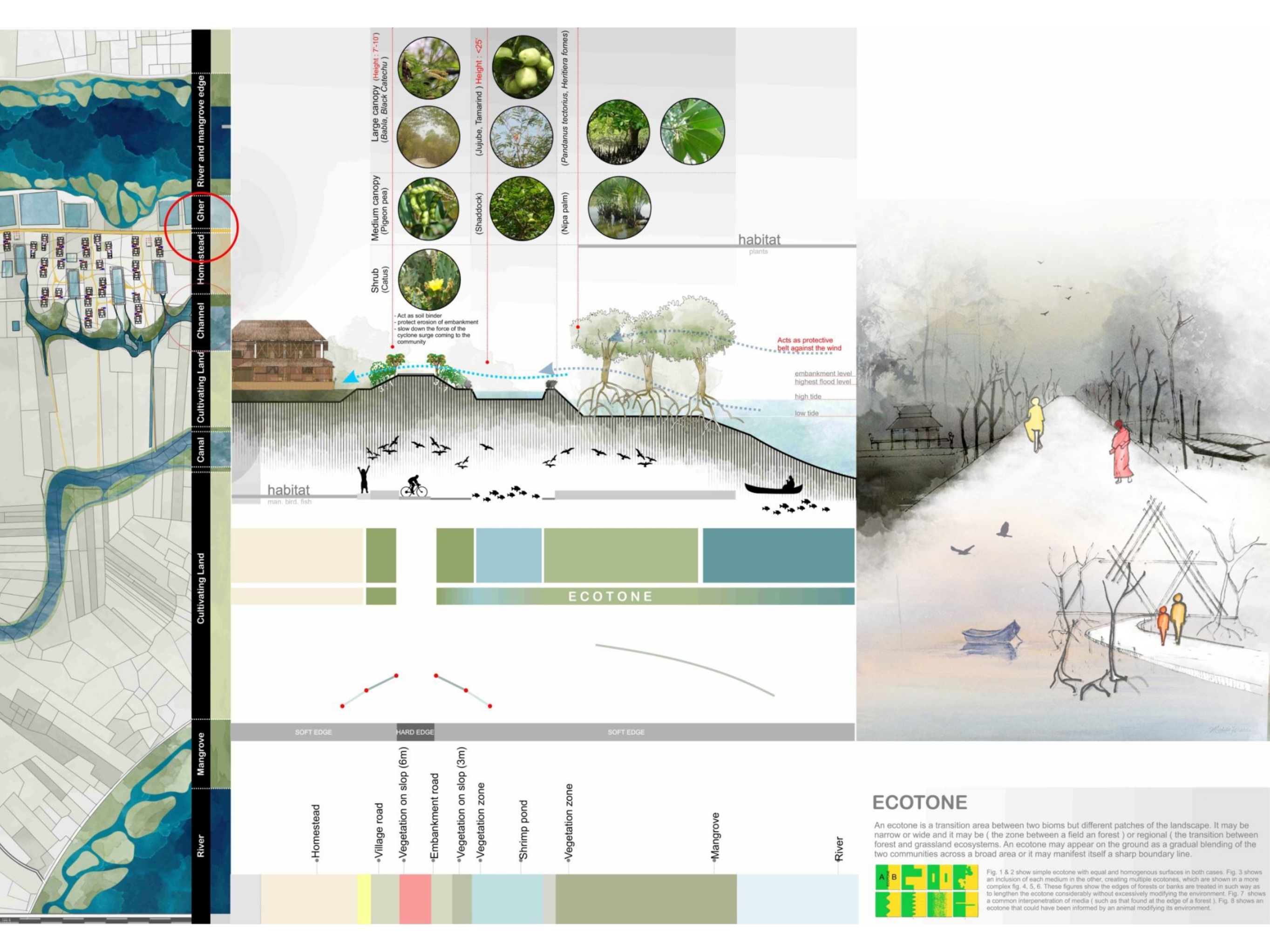
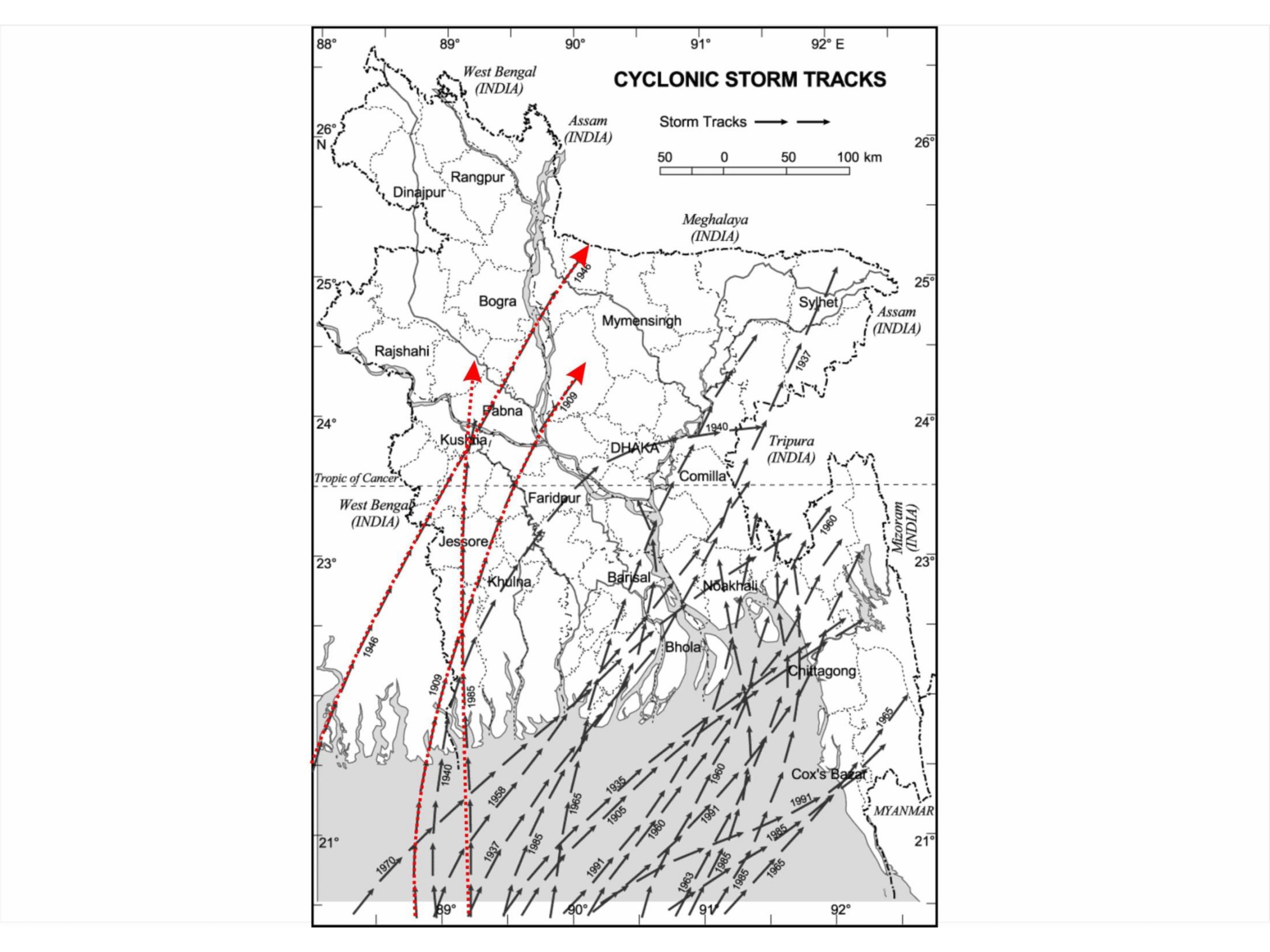
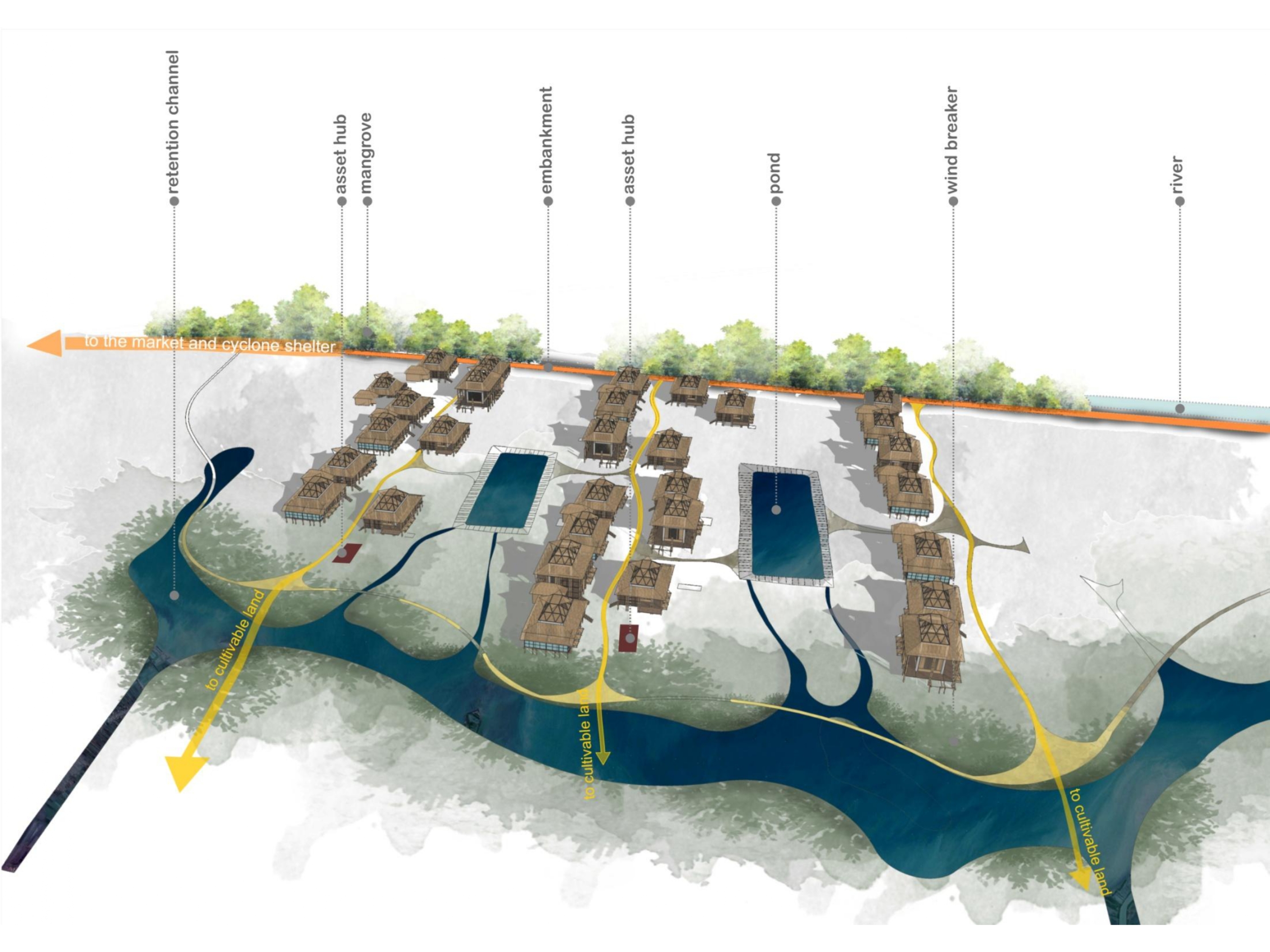
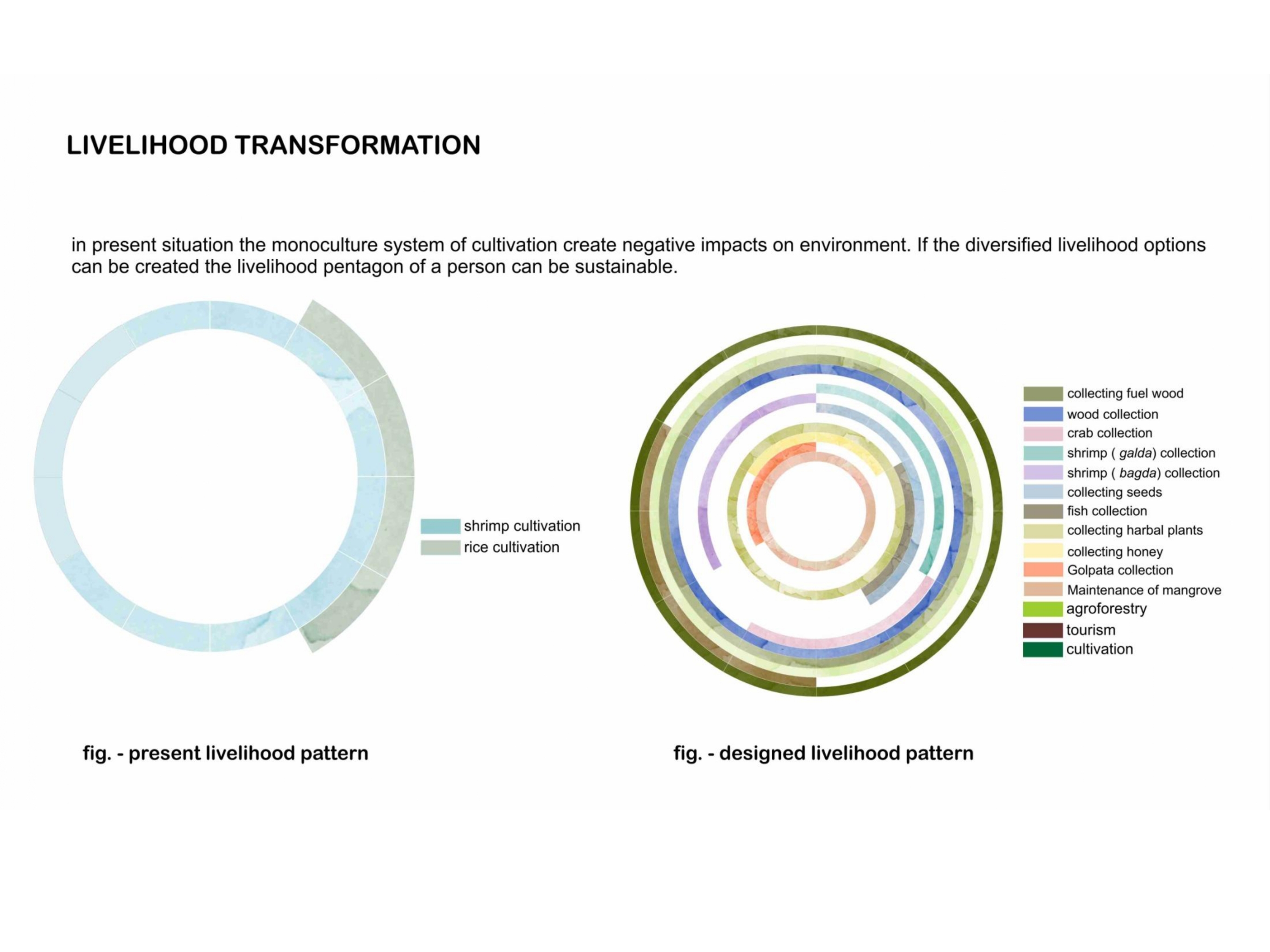
The design process considered the flow of ecosystem forces, such as wind, cyclonic storms, and water, to introduce ecological resilience for vulnerable indigenous communities like the Munda. The Munda, who have lived in the region since 1793, have historically altered the landscape through agricultural and aqua cultural practices, contributing to ecological degradation. Specifically, deforestation of the Sundarbans mangrove forest for agriculture, combined with the expansion of shrimp aquaculture, has increased the community's vulnerability to climate change. This ecological disruption has reduced mangrove cover, increasing susceptibility to cyclones, salinity intrusion, and water scarcity.
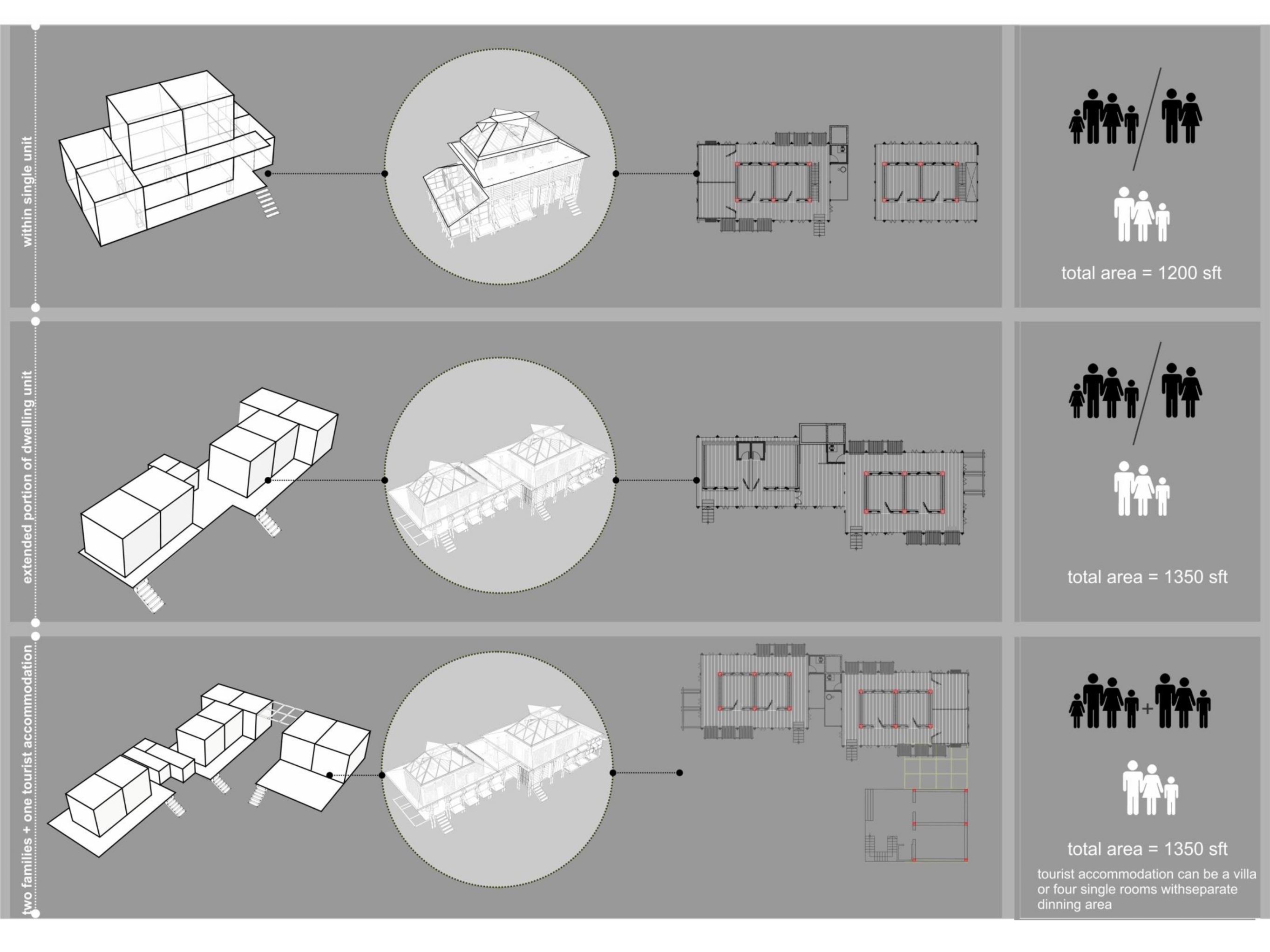
The project investigated how human settlements in this region could be restructured to promote ecological growth while balancing livelihood needs and environmental sustainability. Using secondary data collection, household surveys, and focus group discussions, the study surveyed 60 families on their perceptions of climate events and their socio-economic impacts. The responses were quantified and statistically analyzed to develop a settlement profile that reflected the community’s economic vulnerability to climate hazards.
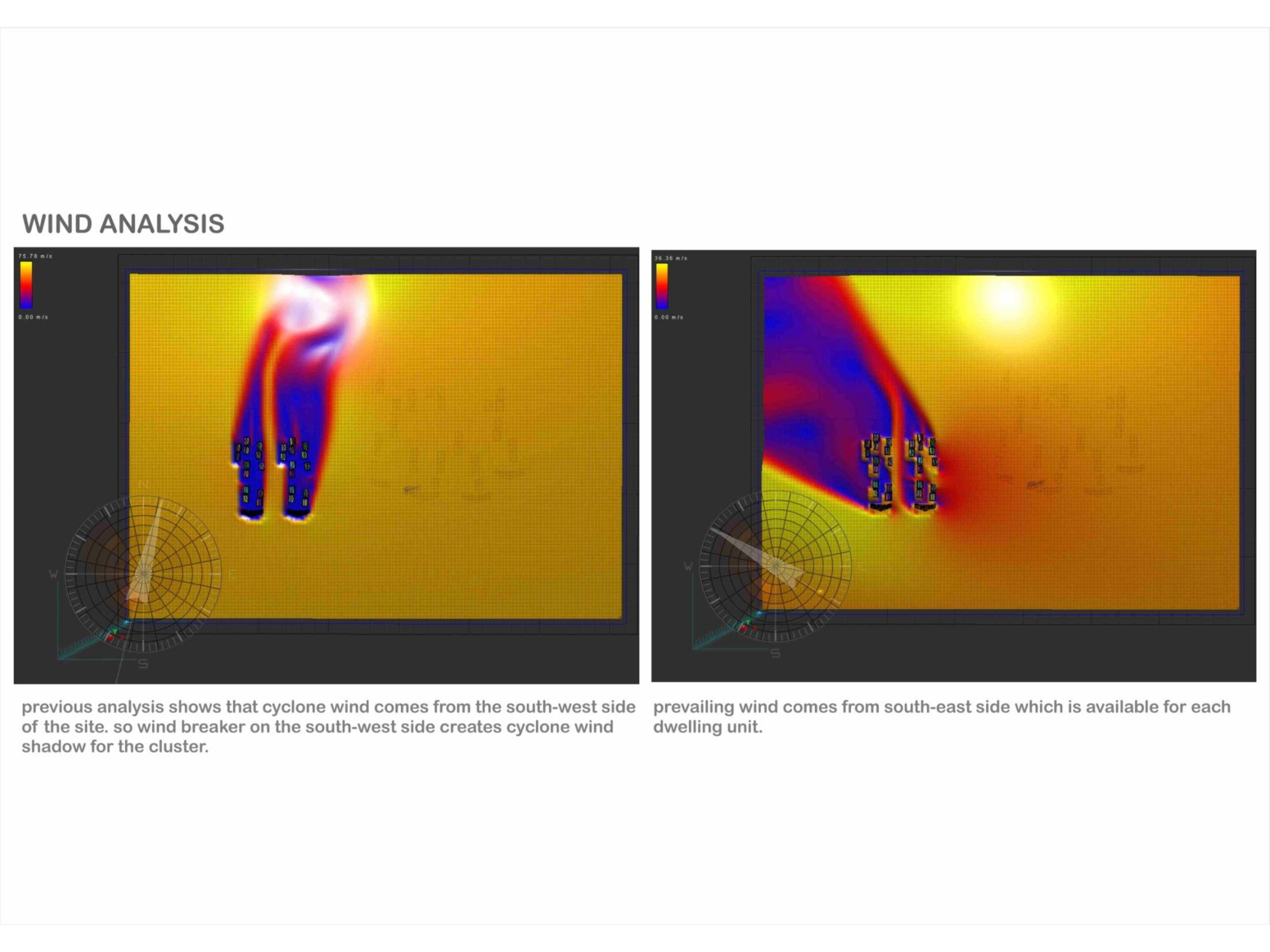
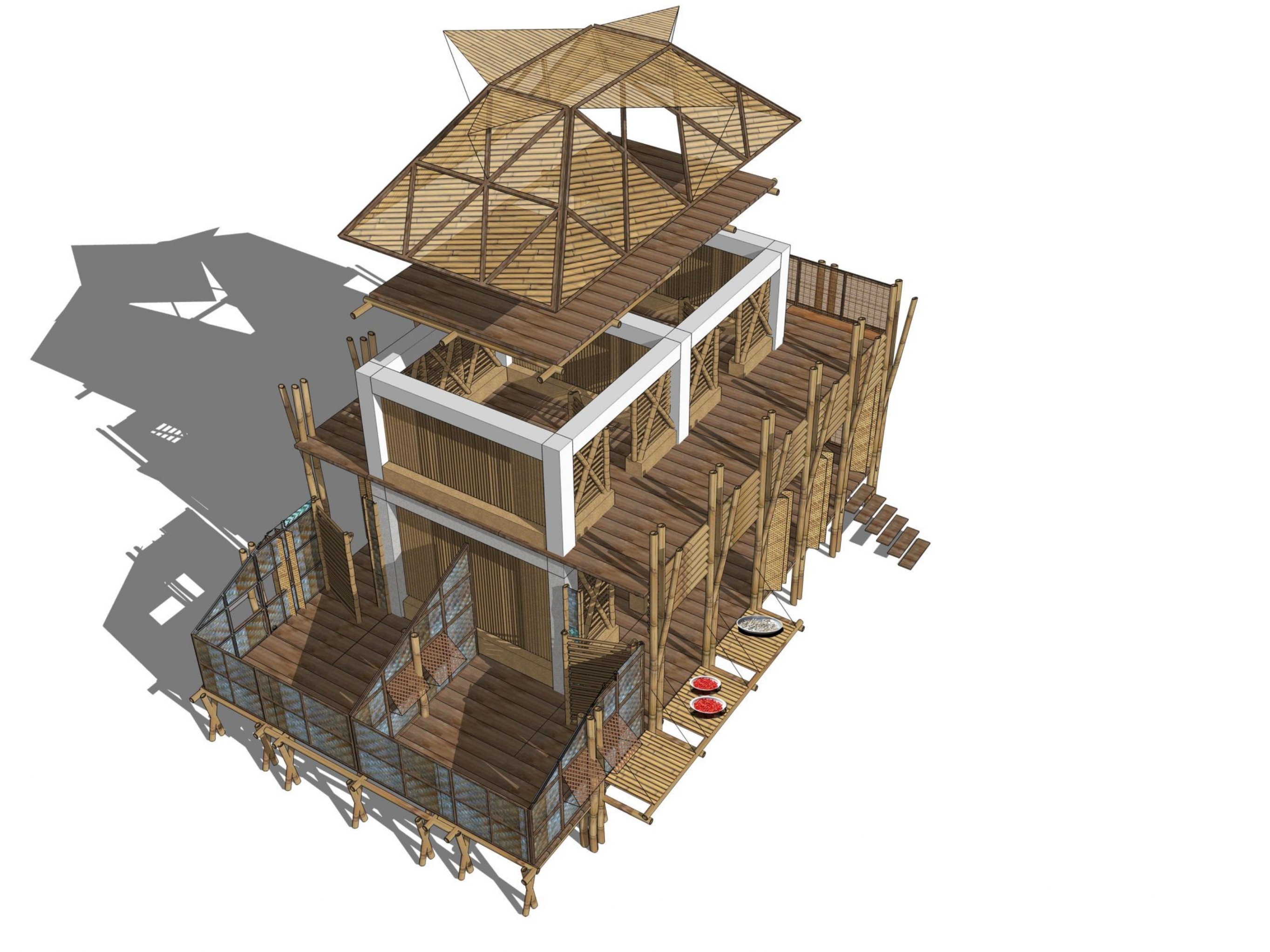
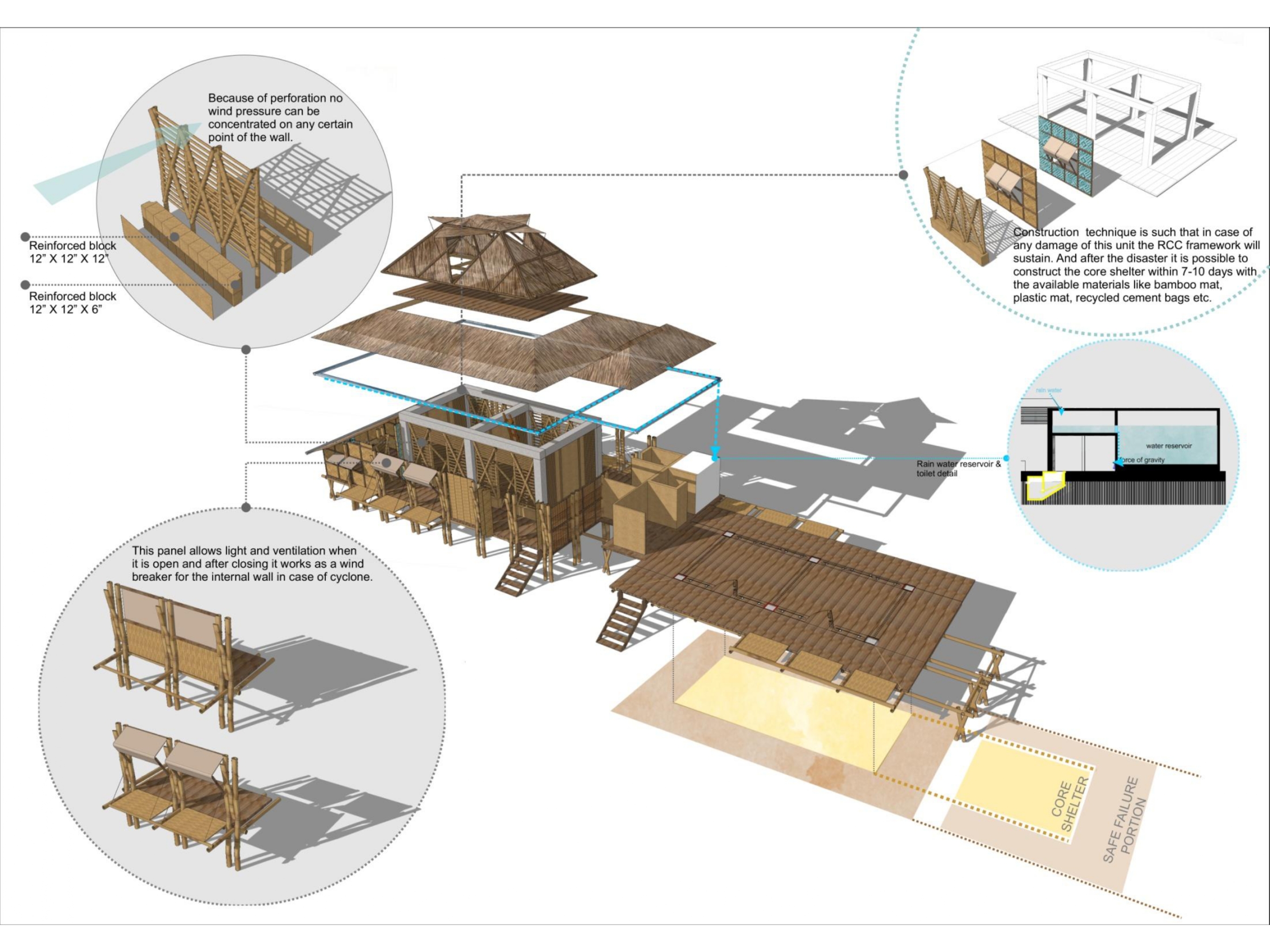
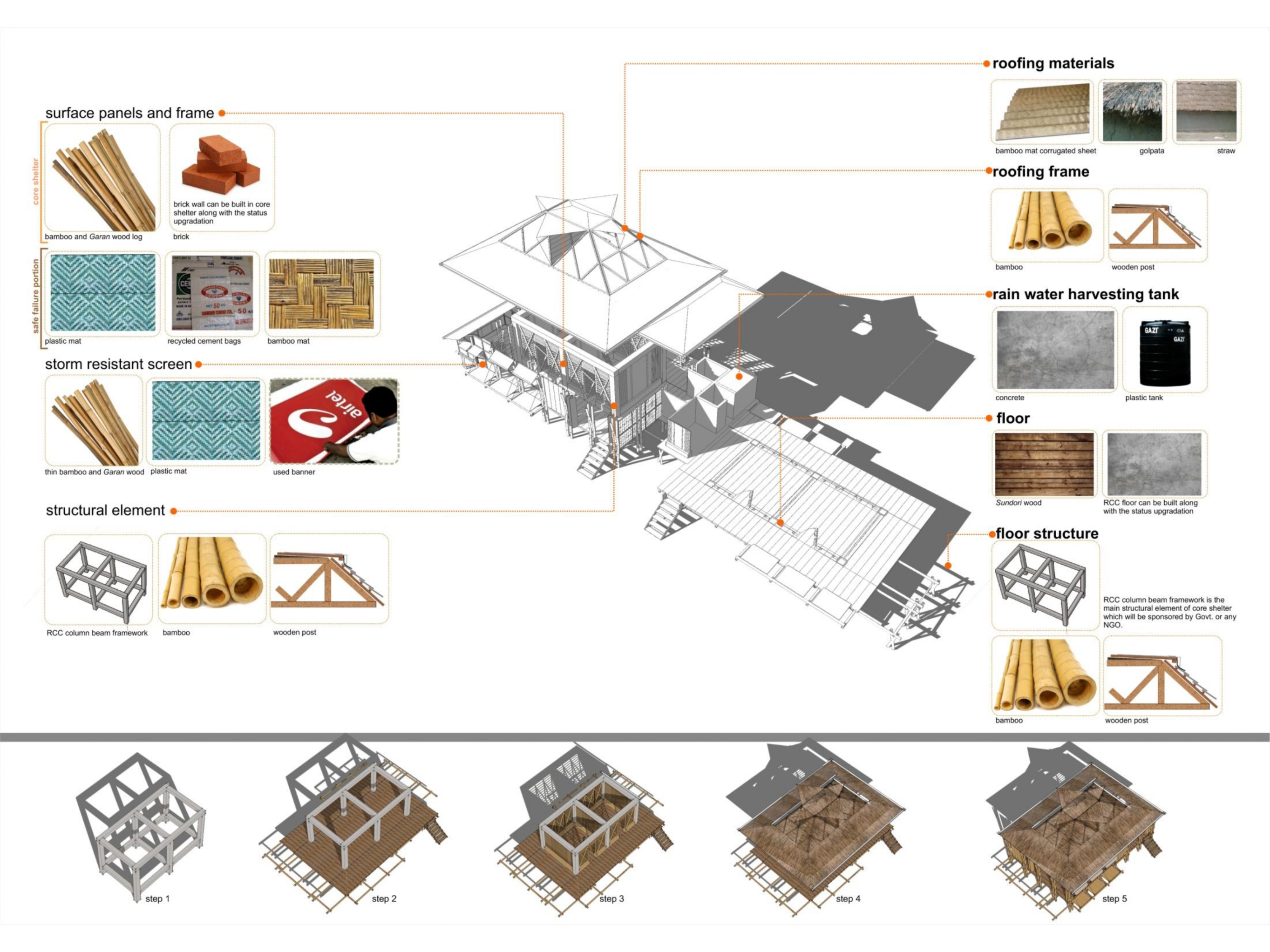
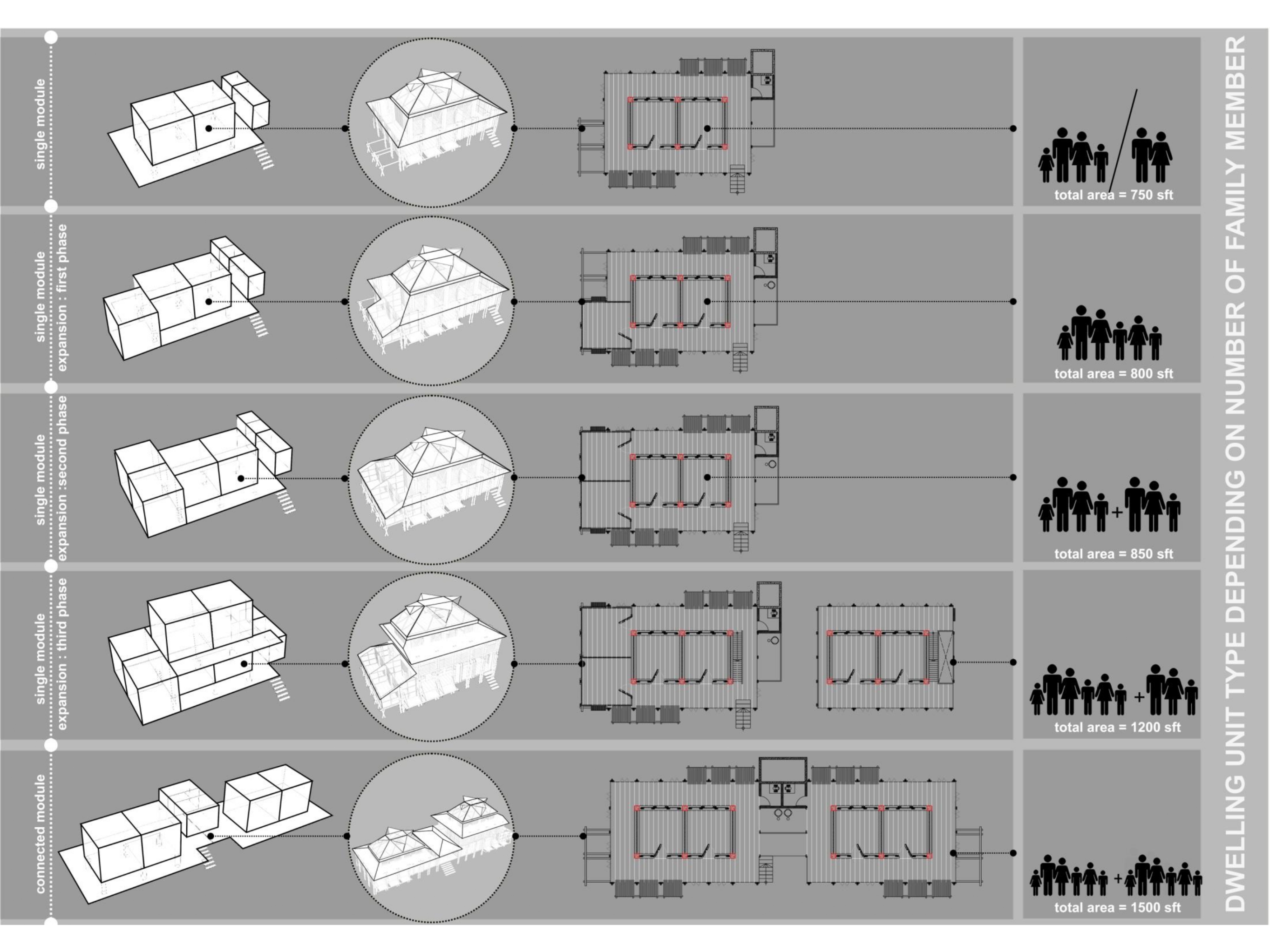
The resilient settlement model utilized Vasari Beta 3 for wind analysis and Autodesk Ecotect for shadow analysis, ensuring safety and promoting sustainable social forestry. The landscape design emphasized ecological resilience by incorporating windbreaker zones with five- and four-strata belts of saline-tolerant species, aimed at protecting the settlement while supporting diversified livelihood opportunities through thoughtful ecological integration.