Location
Gazipur, Dhaka, Bangladesh
Illustration
Simita Roy
Designed By
Simita Roy, Gautam Adhikary, Md. Arifuzzaman and Md. Mosabber Alam Rafi
Category
Academic
Year
2016
Elevating the Green
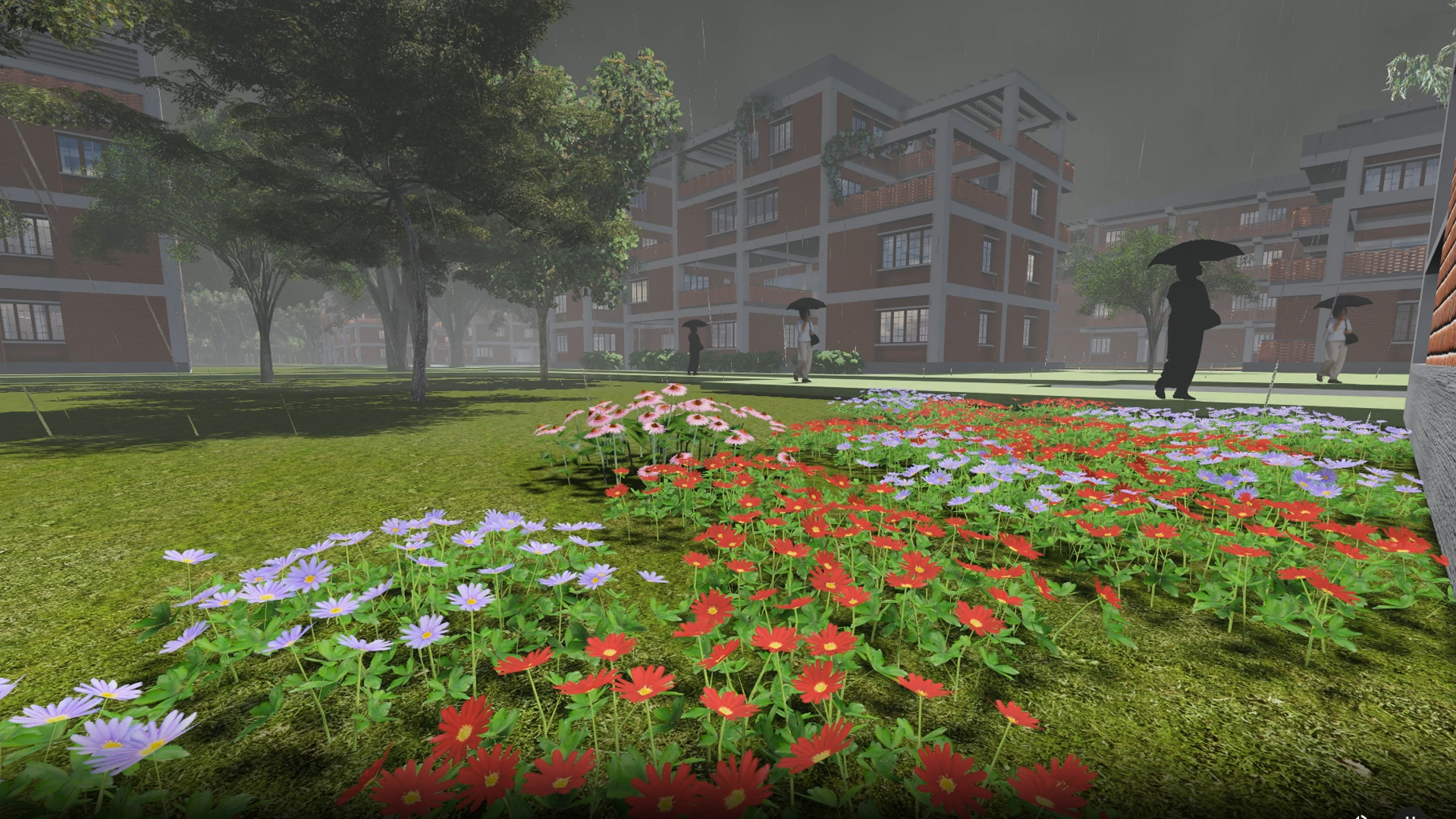
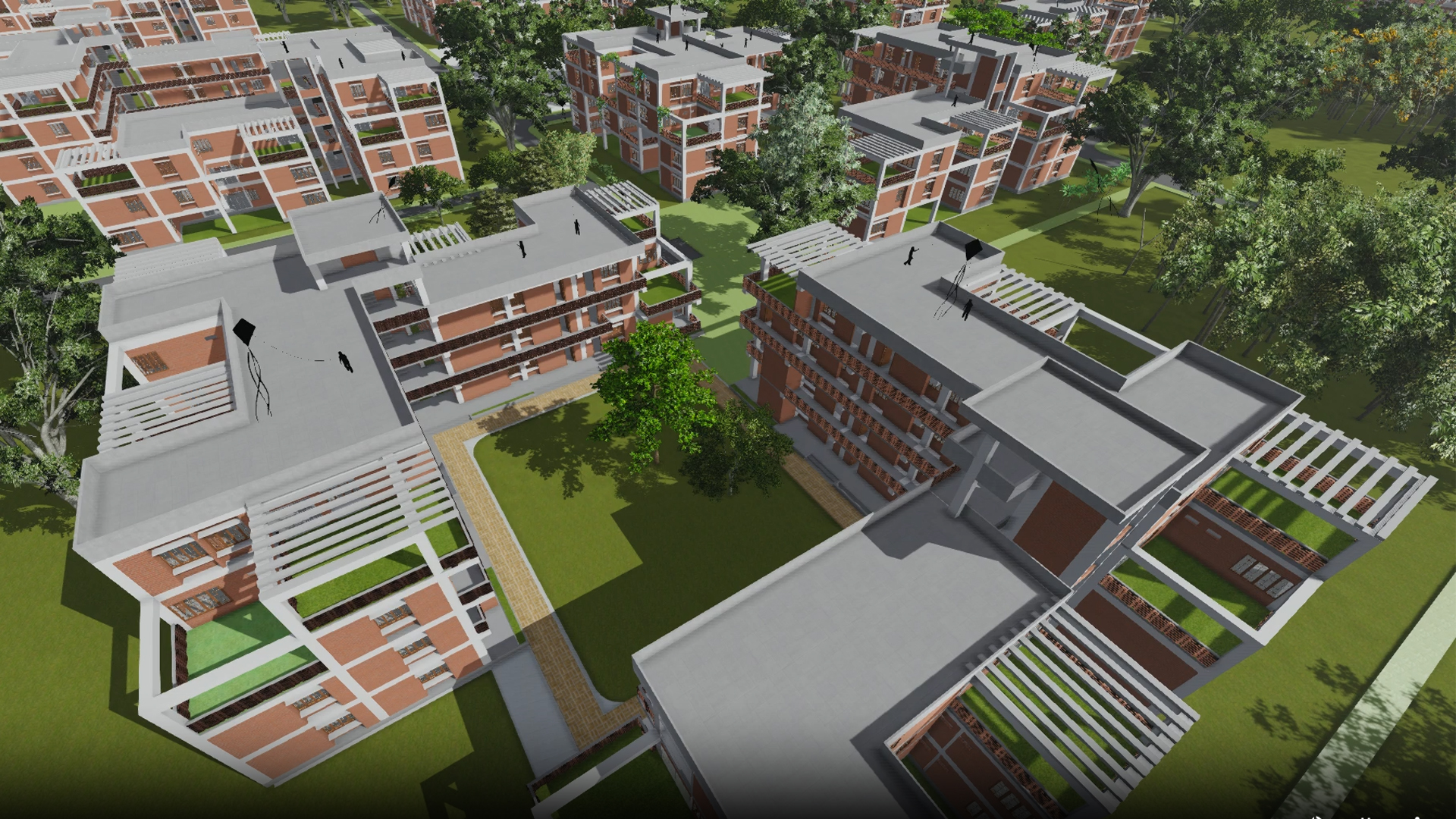
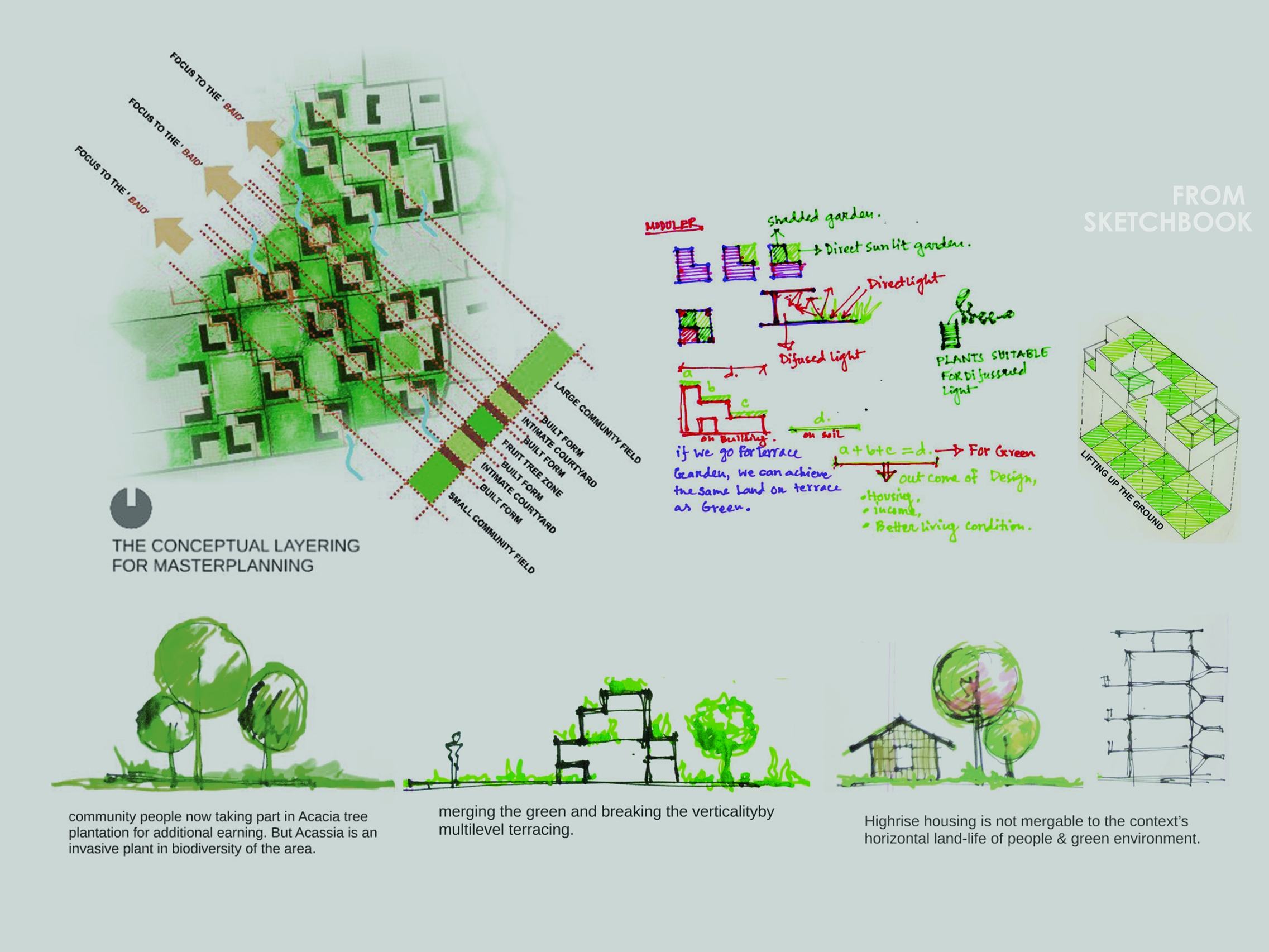
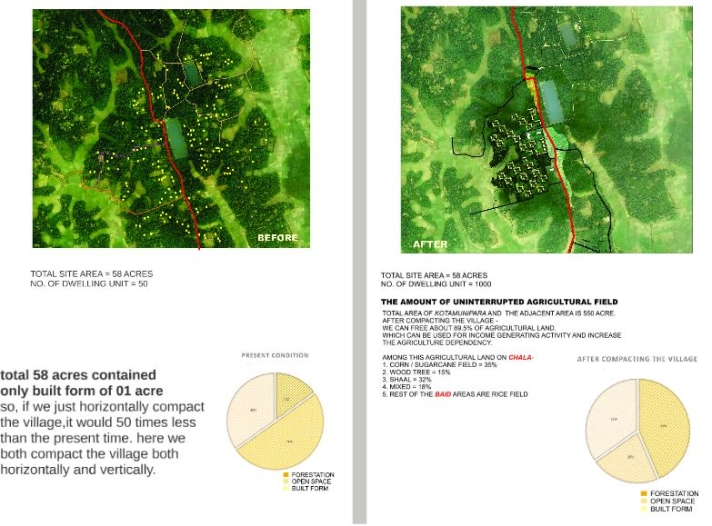
The design concept emphasizes the integration of landscape features to reconnect rural inhabitants with the land, addressing the disconnection caused by compact urban townships. By incorporating green spaces within multilevel housing through terracing, the design harmonizes vertical urban development with the natural environment, preserving horizontal relationships with the land. Traditional high-rise structures often disrupt these connections, fragmenting the organic flow between land and nature. To mitigate this, terraced gardens are introduced in elevated urban areas, reintroducing greenery and maintaining a vital link between people and the environment.
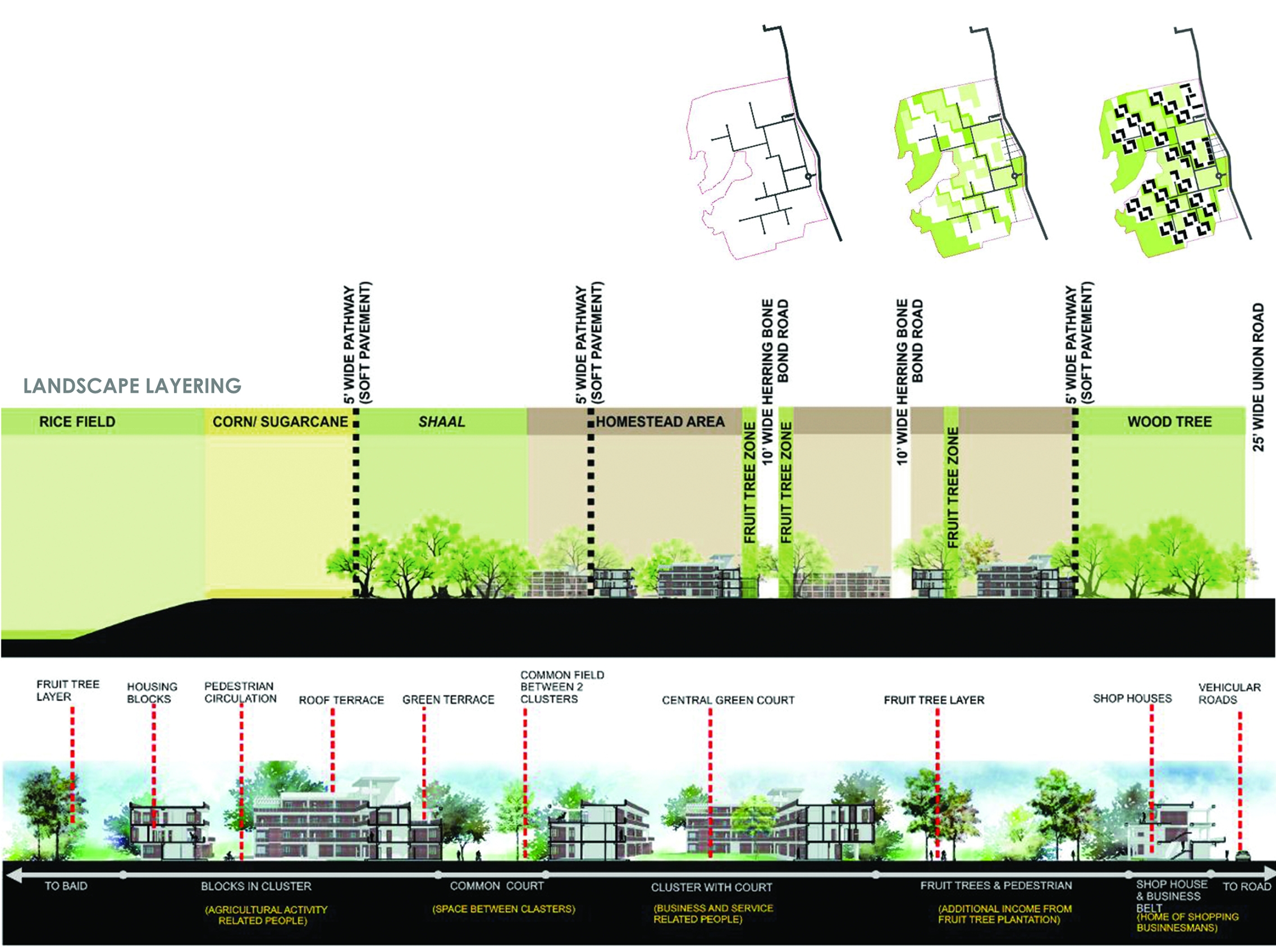
A key feature of the design is the layering of landscape patterns that align with the area’s topography and agricultural requirements. Lower-lying lands, rich in water resources, are dedicated to rice cultivation, while the higher elevations are allocated for cash crops like corn and sugarcane, supporting the livelihoods of local communities. Social forestry zones, featuring fruit trees, are strategically placed between homestead layers, enhancing food security and fostering ecological stability. Alongside major infrastructure, such as highways, wood tree zones are established, providing environmental benefits like shading, windbreaks, and carbon sequestration.
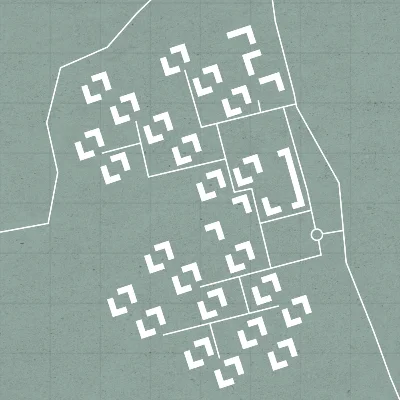
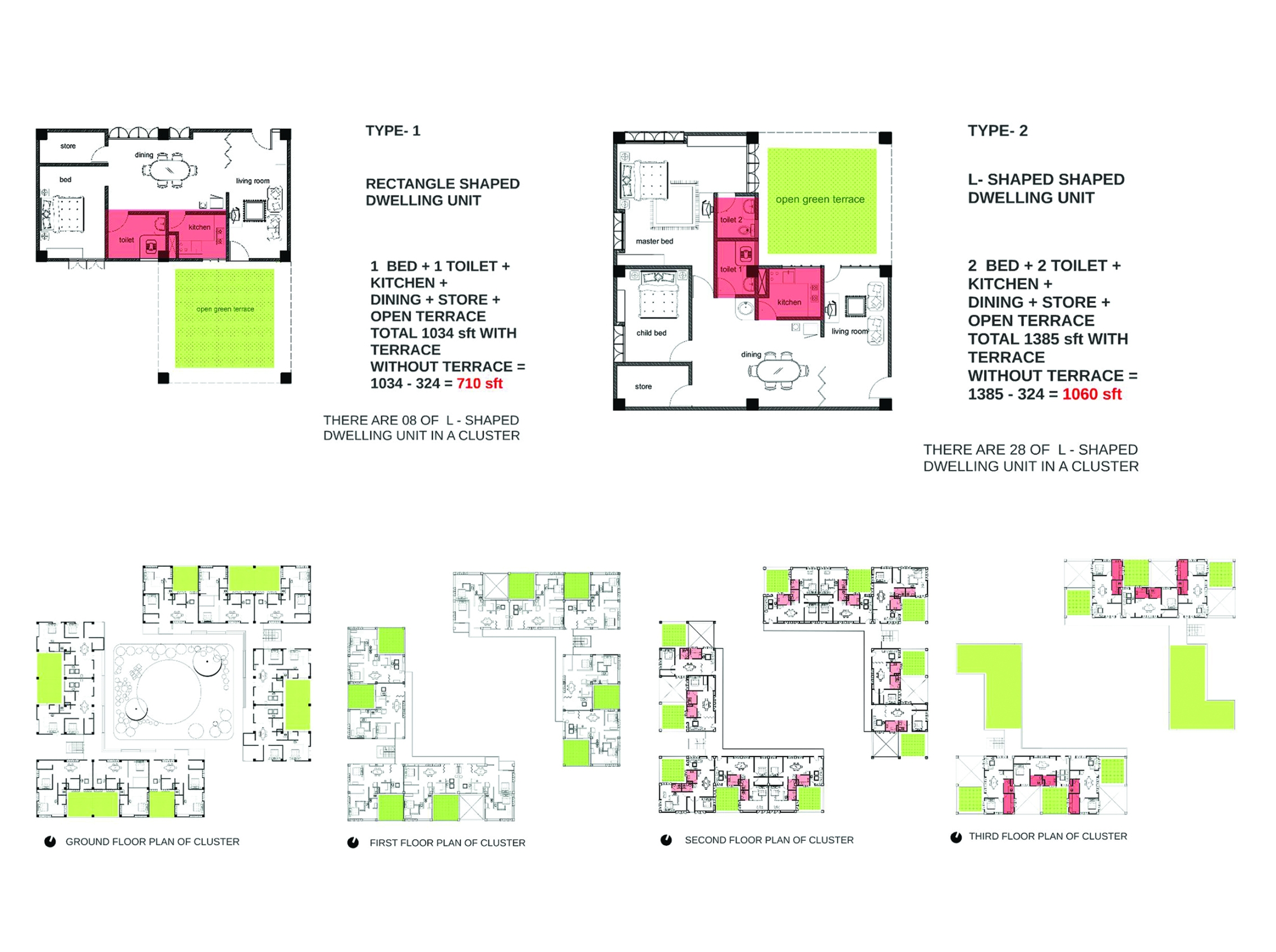
Community clusters are organized around central courts, serving as shared social spaces, while individual homesteads include green terraces for vegetable cultivation. These terraces offer residents the opportunity to engage in urban farming, creating a direct connection to the land even in multilevel living environments. By utilizing vertical spaces, the design optimizes farming opportunities and living conditions. Additionally, it incorporates native plant species and strategically uses sunlight and shading to boost ecological resilience and improve the microclimate.
By blending social forestry with urban landscapes, the design fosters ecological sustainability, enhances climate adaptability, and restores the human-land relationship in the context of rapid urbanization.