Location
Shyamnagar, Sathkhira, Bangladesh
Illustration
Simita Roy
Designed By
Simita Roy
Category
Academic
Year
2016
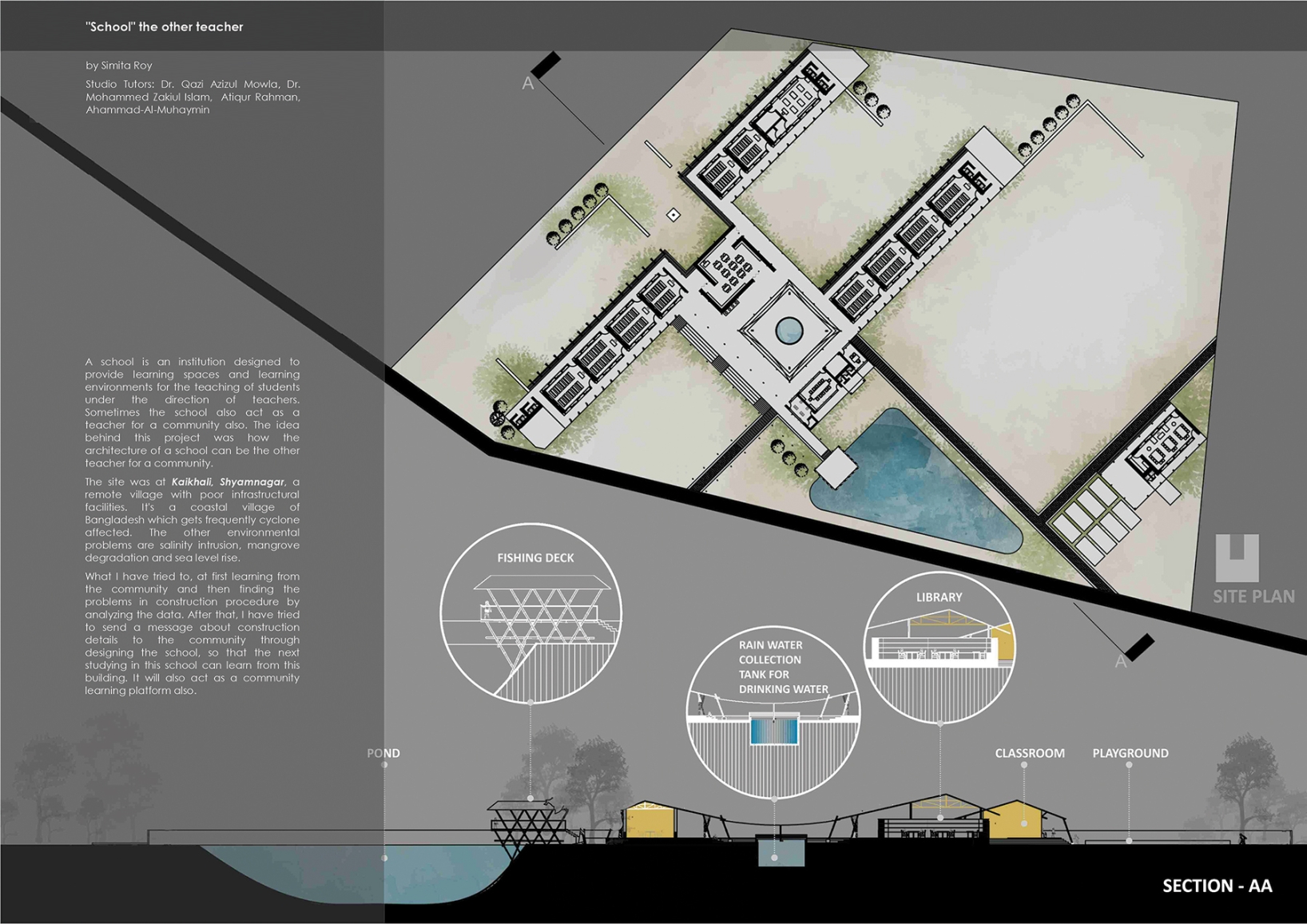
During the sixth semester of my undergraduate studies, I embarked on a project aimed at addressing the urgent need for educational facilities in a remote rural area of Bangladesh. The chosen site was home to an ethnic group that faced significant infrastructural challenges, including inadequate transportation networks, lack of electricity, and the absence of educational institutions. This experience provided valuable insights into the struggles faced by communities in the delta, where residents grapple with limited opportunities to improve their living conditions.
The context of the project inspired me to reimagine the school as a dynamic learning environment, one that could empower the younger generation to thrive despite prevailing adversities. Through comprehensive site surveys, I discovered that the area had become increasingly saline due to prolonged waterlogging, a consequence of a devastating cyclone. Moreover, the community lacked awareness of saline-tolerant agricultural practices and exhibited limited diversification in their livelihoods.
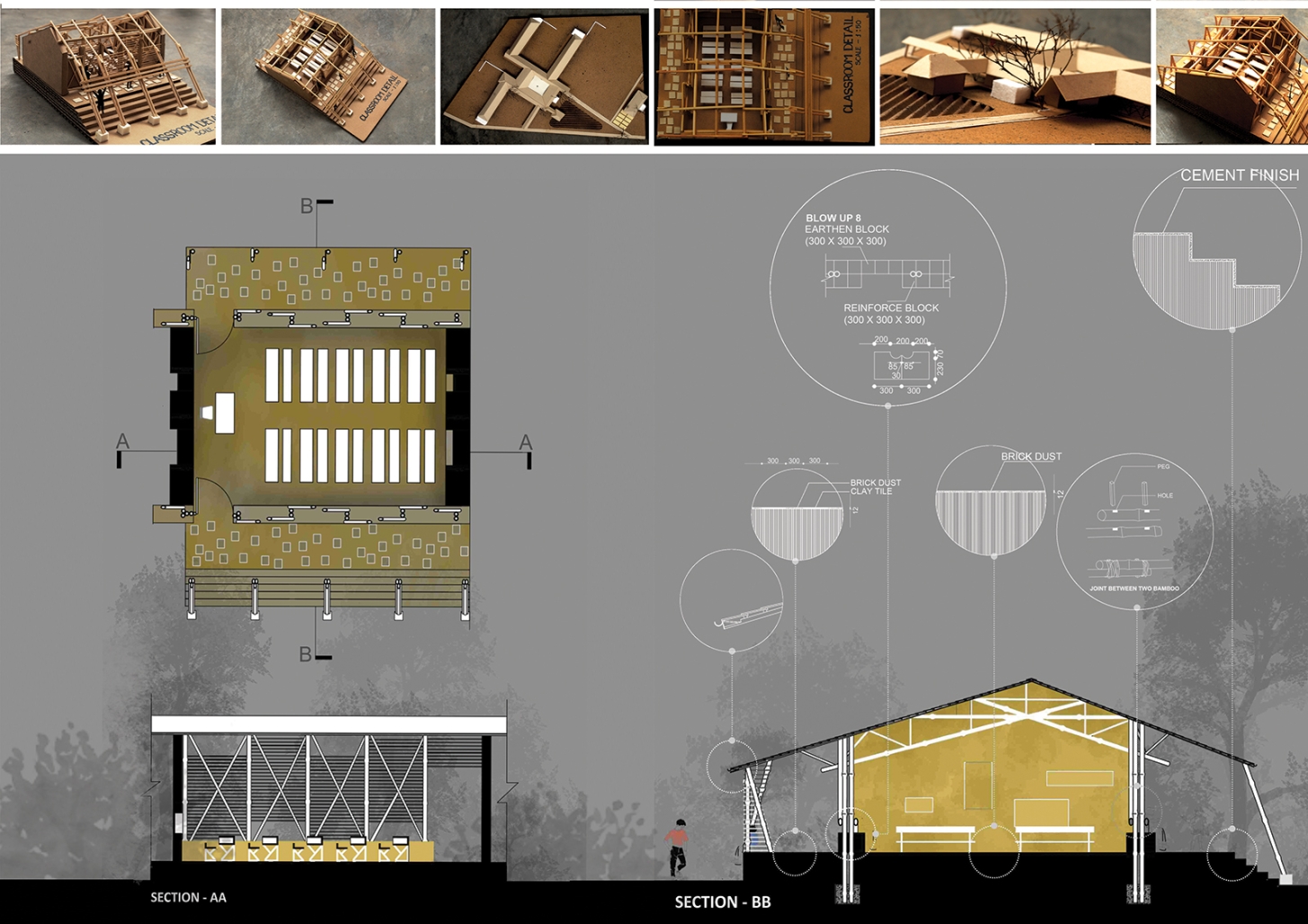
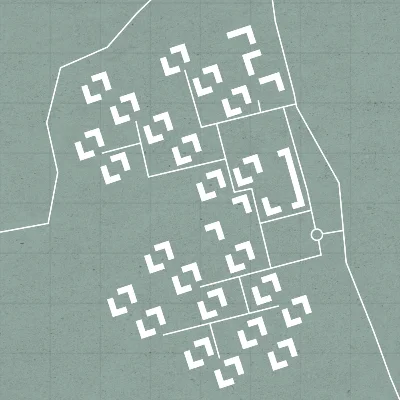
In response to these landscape challenges, I designed the school landscape to function as an educational platform for students, enabling them to learn about selecting and maintaining saline-resistant crops. Learning plots were strategically placed along the pathways regularly used by students, encouraging their active participation in agricultural education. Additionally, I incorporated a workshop platform to facilitate training in alternative livelihood skills, such as pottery making and tailoring. This approach not only aims to enhance the community's resilience but also fosters adaptability and innovation among the youth, equipping them with the skills necessary to navigate their changing environment effectively.